
Compassion: Impact of Increased Empathy at Point of Referral
Background
Eye care has a growing need with an estimated 1.1 billion people globally with vision loss.
Evidence-based, cost-effective solutions already exist that could alleviate the vast majority of vision loss, however, many people do not know they are available or are unable to access them.
Many people identified in screening programmes and referred for treatment do not make it to the next level of care. One of the challenges is that screeners are under pressure to identify as many people as possible with eye health needs. The pressures to deliver results with maximum efficiency compromises the ability of caregivers to pay attention to the individual’s full needs. A screener may also be the first impression of the “healthcare system” that a patient might encounter, so the experience can be key for ensuring people receive further care.
The Project
Two ICEH collaborators, Peek Vision and Shroff’s Charity Eye Hospital (SCEH), have been working together in India since 2020.
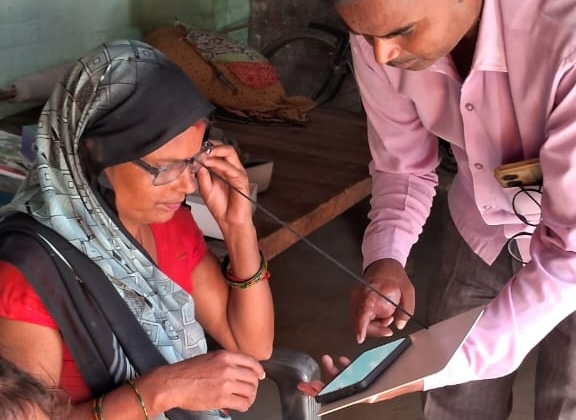
SCEH programmes employ a team of village screeners to identify and refer people from schools and households to secondary Vision Centres for treatment. Anyone with serious eye health needs is then referred to hospital.
Over 650,000 people have been screened to date, with the average number of screenings per day per screener at 60. Each screening takes on average 4 minutes. The mean referral adherence (people reaching the Vision Centres) from is 41%.
This programme provides the ideal opportunity to test a low-cost, low-risk intervention with potential to increase the number of people receiving eye care and to simultaneously increase retention and satisfaction of the workforce and patients.
The project aims to test the addition of training on intentional listening together with a “pause”, i.e. more time, at the point of referral. In the intervention group an individual identified as having screened positive is given additional time with the screener to build trust and have an engaging conversation together.
We will aim to answer:
- Does the introduction of more time, to engage with, and listen to people when screened at the household level lead to a greater proportion of those referred taking up those services at the local vision centre?
- Does the uptake in services increase in number despite (potentially) fewer people screened per day?
In addition, we will also investigate:
- Does the inclusion of a ten-minute pause lead to improved perception of services from patients?
- Does the inclusion of a ten-minute pause lead to improved perception of job satisfaction from healthcare providers?
Results will be published in 2026
“Technology is very helpful at identifying problems, and then optimizing the solution, but the solution is rarely technological. It’s usually person to person. It’s compassion.” – Professor Andrew Bastawrous