
Effective Cataract Surgical Coverage
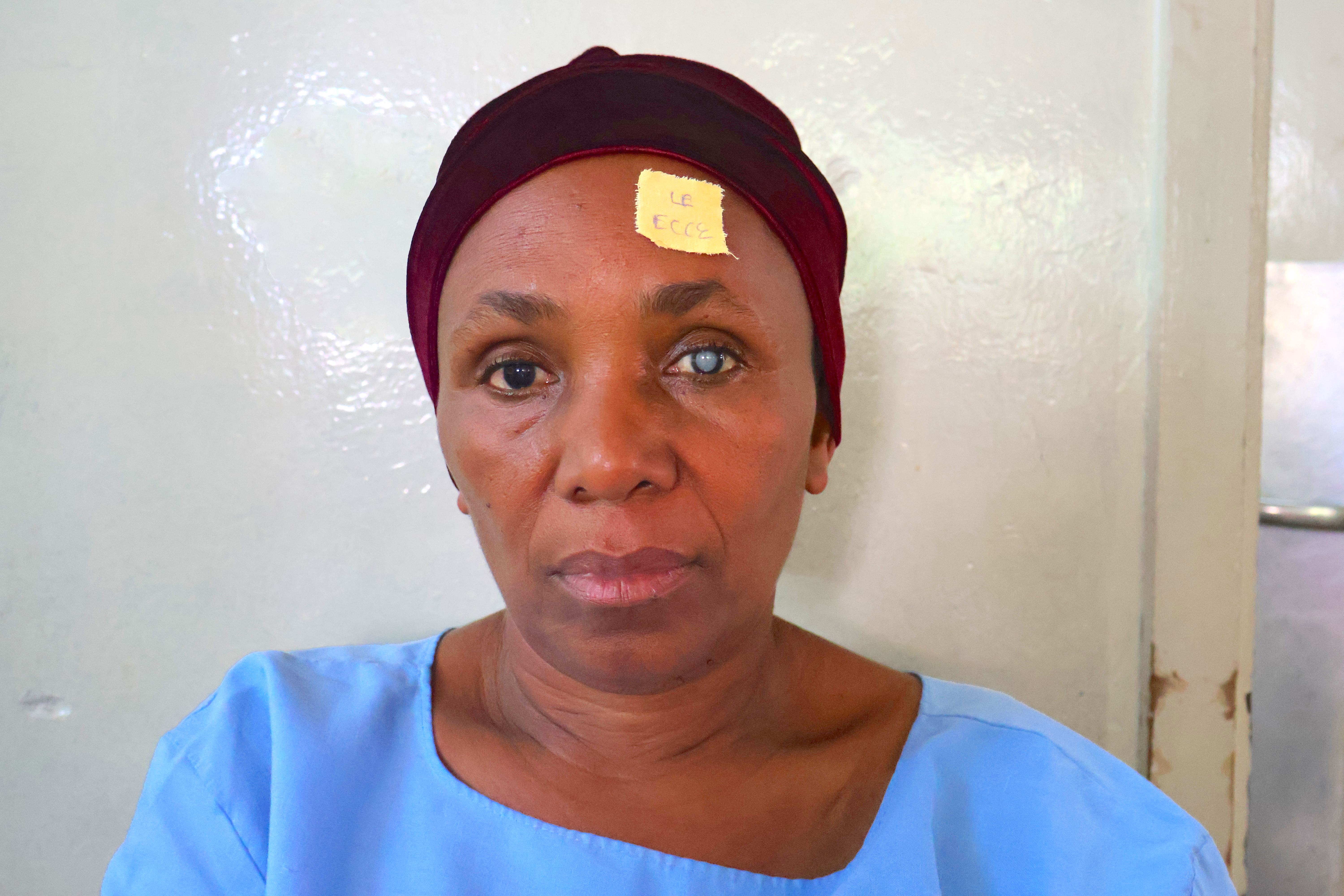
Effective cataract surgical coverage (eCSC) measures the number of people in a population who have been operated on for cataract, and had a good outcome, as a proportion of all people operated on or requiring surgery.
Therefore, eCSC describes access to cataract services (i.e. cataract surgical coverage, CSC) adjusted for quality. In 2021, Member States at the 74th World Health Assembly endorsed a global target to increase eCSC by 30-percentage points by 2030.
We analyse Rapid Assessment of Avoidable Blindness (RAAB) survey data to generate new estimates of eCSC and CSC to monitor progress towards the 2030 target.
Baseline estimates
We used data from 148 RAAB surveys undertaken in 55 countries (between 2003 and 2021) to calculate eCSC, CSC, and the relative quality gap (the percentage difference between eCSC and CSC) as a baseline for monitoring these values. We compared median eCSC between WHO regions and World Bank income strata and calculated the pooled risk difference and risk ratio comparing eCSC in men and women. Almost all the data included in the analysis is available open access via the RAAB repository (www.raab.world). In addition, we presented a minor update to the method of calculating CSC/eCSC from survey data.
We found a wide range of eCSC estimates, ranging from 3·8% (95% CI 2·1–5·5) in Guinea Bissau, 2010, to 70·3% (95% CI 65·8–74·9) in Hungary, 2015, and the relative quality gap from 10·8% (CSC: 65·7%, eCSC: 58·6%) in Argentina, 2013, to 73·4% (CSC: 14·3%, eCSC: 3·8%) in Guinea Bissau, 2010. Median eCSC was highest among high-income countries (60·5% [IQR 55·6–65·4]; n=2 surveys; 2011–15) and lowest among low-income countries (14·8%; [IQR 8·3–20·7]; n=14 surveys; 2005–21). eCSC was higher in men than women (148 studies pooled risk difference 3·2% [95% CI 2·3–4·1] and pooled risk ratio of 1·20 [95% CI 1·15–1·25]).
Progress to 2030
In early 2026 we published research showing that global progress is expected to fall well short of the agreed 30 percentage point target.
The team analysed 233 population-based eye health surveys from 68 countries conducted between 2003 and 2024 to estimate eCSC. Despite some countries showing good progress between surveys (Qatar improved by 26.8 percentage points between 2009 and 2023, and is currently at 78%), modelled estimates show that most WHO regions are projected to see only modest increases. Worldwide, eCSC is predicted to increase by only 8.4 percentage points between 2020 and 2030, well short of the 30 percentage-point target.
Future work will aim to assess eCSC coverage and progress at further timepoints.
Acknowledgements and funding
The RAAB project is funded by Indigo Trust and Peek Vision. Matthew Burton and Andrew Bastawrous are supported by the Wellcome Trust.
Publications
McCormick I, Ouchtar Y, Macleod D, Harte A, Cicinelli MV, Sedighi T, Jolley E, Ravilla TD, Gichangi M, Huang Y, Wang N, Salowi MA, Mishra SK, Bourne RA, Resnikoff S, Keel S, Burton MJ, Ramke J on behalf of the eCSC Study Group. Effective cataract surgical coverage in adults aged 50 years and older: empirical estimates from population-based surveys in 68 countries and modelled estimates for 2000–30. Lancet Global Health. February 2026. https://doi.org/10.1016/S2214-109X(25)00435-8
McCormick I, Butcher R, Evans JR, et al. Effective cataract surgical coverage in adults aged 50 years and older: estimates from population-based surveys in 55 countries. The Lancet Global Health. 2022; 10, e1744-53. https://doi.org/10.1016/S2214-109X(22)00419-3
Associated resources
WHO Summary of recommendations for quality of care in cataract surgery management: https://iris.who.int/items/c0a4d475-334b-4f55-9660-c02af389f9d3
WHO Report of the 2030 targets on effective coverage of eye care: