
Global Eye Health Research Agenda
Vision impairment affects more than 1.1 billion people worldwide, most of whom live in low- and middle-income countries and have conditions that are preventable or treatable with existing, cost-effective interventions. Despite substantial progress in eye health research and service delivery, major evidence gaps continue to limit countries’ ability to provide equitable, high-quality care.
In response to a mandate from the World Health Assembly, the World Health Organization (WHO) is developing a Global Eye Health Research Agenda to align research efforts with population needs and strengthen decision-making at national and global levels. The initiative is coordinated by ICEH, acting as WHO’s technical collaborator, and aims to identify the most important research questions across priority themes. A central goal is to generate evidence that can inform policies, close gaps in service delivery, and advance innovation and equity so that more people can benefit from effective eye care.
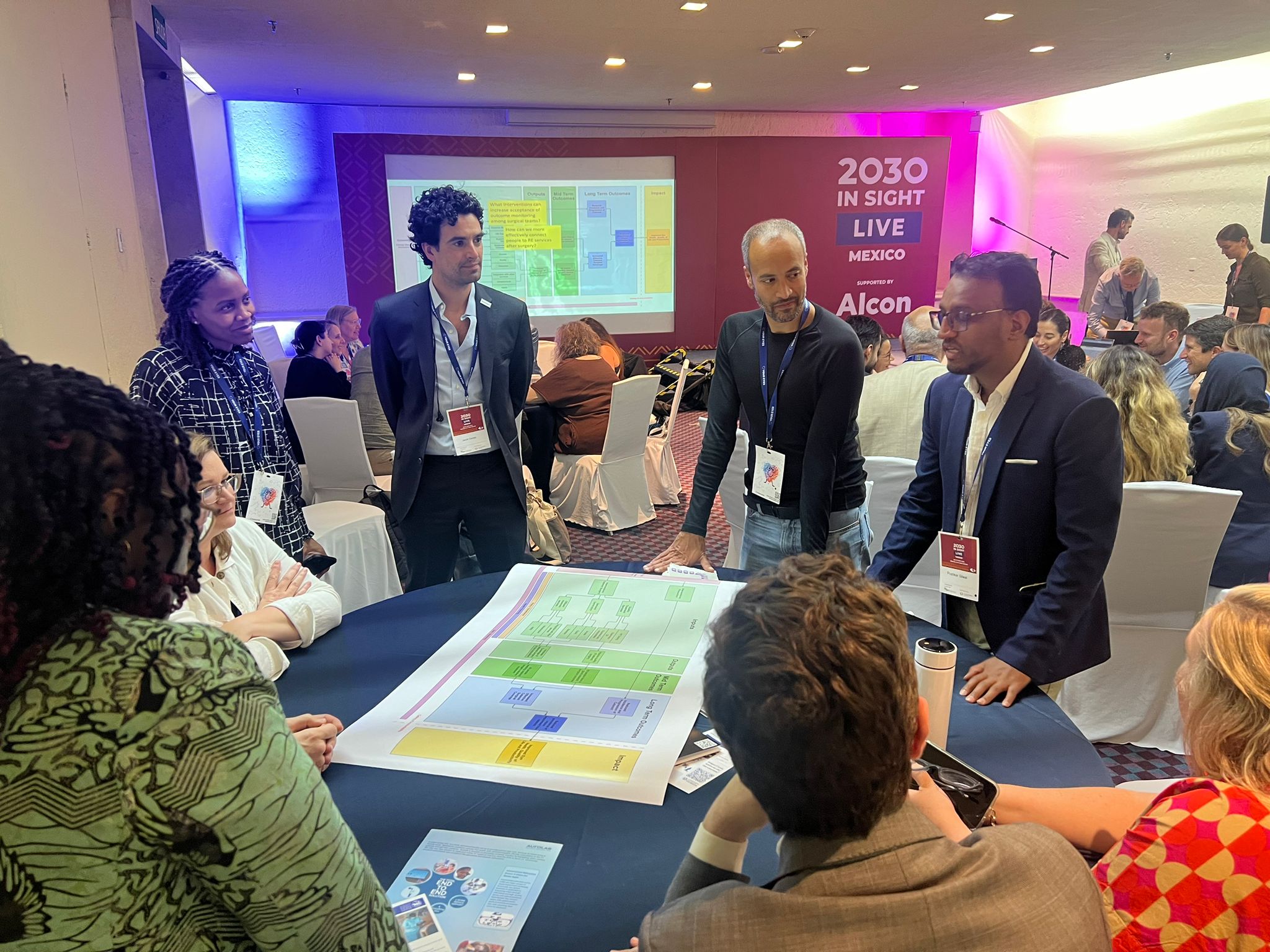
The Agenda is being developed using a structured, multi-phase, and globally inclusive approach aligned with WHO guidance for research priority-setting. ICEH and WHO have convened diverse stakeholder groups, including people with lived experience, clinicians, programme implementers, researchers, and policymakers from all WHO regions to contribute to the process.
These groups have collaboratively developed Theory of Change frameworks to guide the formulation and mapping of research questions. This was followed by a survey that asked stakeholders to propose further research questions. The team is now working on the organisation and synthesis of the first round of these responses.
In the upcoming surveys prioritisation will be completed through a two-stage ranking and scoring process using criteria of public health benefit, feasibility, cost, and equity. The resulting WHO Global Eye Health Research Agenda will present the top priorities within each theme and serve as a foundation for coordinated action, investment, and policy implementation.