
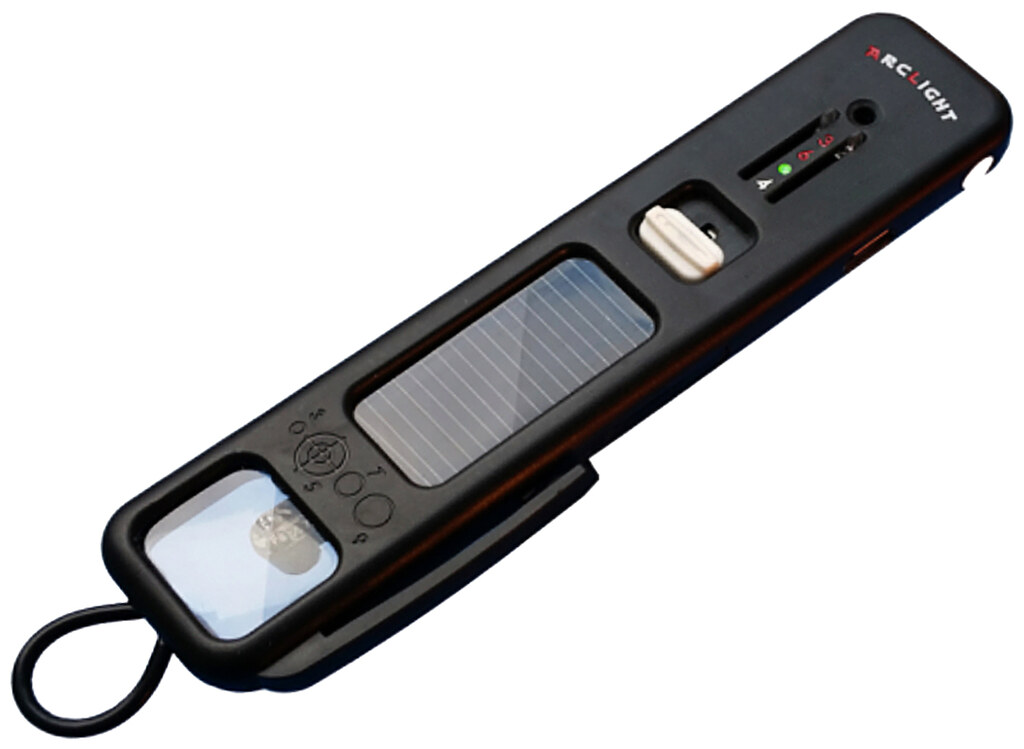
In global eye health, simple, affordable diagnostic tools could significantly widen access to essential examinations – particularly in low- and middle-income countries where specialist equipment is scarce. Recent research provides strong new evidence that the Arclight, a compact, solar-powered direct ophthalmoscope, performs reliably compared with more costly conventional devices, and could support expanded screening and diagnosis of eye disease.
The Arclight was developed for use in low-resource settings, combining direct ophthalmoscopy with other assessment features in a single, low-cost device. Two new studies, involving researchers from the International Centre for Eye Health, have provided further high-quality, comparative evidence for its use.
A 2025 study published in the Saudi Journal of Ophthalmology evaluated the Arclight’s performance when used by a non-ophthalmologist examiner compared with clinical assessments by a paediatric ophthalmologist employing standard specialist equipment. In this prospective study involving 108 participants (211 eyes), a medical student used the Arclight to assess fundal features (changes at the back of the eye) including the cup-to-disc ratio (CDR) – an important process in the condition glaucoma. The student’s mean CDR measurements were very close to those of the specialist (0.325 vs. 0.331, p=0.27), and 95% of measurements agreed within a clinically acceptable range, demonstrating good accuracy for a low-cost tool. The Arclight was also found to be user-friendly and efficient, with highest ease-of-use ratings and shorter examination times for dilated eyes. The authors concluded that the Arclight is a reliable and practical diagnostic tool for these kind of tests, with its affordability making it particularly relevant for low- and middle-income contexts where access to traditional devices is limited.
Complementing this, a recent study published in Medical Devices (Auckland) compared the Arclight loupe with a handheld slit lamp for diagnosing anterior segment (front of the eye) diseases, including common conditions such as pterygium and conjunctival pathology. The results showed that frontline clinicians correctly identified a similar proportion of conditions using both devices (71.2% for Arclight vs. 72.3% for slit lamp), suggesting that the Arclight can perform comparably to more expensive equipment in routine clinical diagnosis. Importantly, focus group discussions indicated that the Arclight was generally well-accepted and easy to use among ophthalmic clinical officers.
These findings build on earlier evidence that the Arclight can reliably estimate vertical cup-to-disc ratios and may support broader screening and diagnostic activities when integrated with training programmes. Previous studies have also shown its utility in identifying clinical signs and correct diagnoses across a range of retinal conditions when compared with traditional devices.
Taken together, this emerging body of evidence supports the Arclight’s role as a low-cost alternative for ophthalmic testing, one that is easier to use and broadly acceptable, while maintaining diagnostic performance close to standard tools. This makes it a strong candidate for inclusion in eye health programmes aiming to reduce barriers to early detection and treatment of vision-threatening conditions.
Publications
Carlson TM, Morphew T, Nikdel M et al. Evaluating the effectiveness of the Arclight: A compact solar-powered low-cost direct ophthalmoscope. Saudi Journal of Ophthalmology. November 2025. https://doi.org/10.4103/sjopt.sjopt_98_25
Atakunda I, Lusobya RC, Semulimi AW et al. The Comparison Between Arclight Loupe and Handheld Slit Lamp in Anterior Segment Eye Disease Diagnosis. Med Devices (Auckl). November 2025. https://doi.org/10.2147/MDER.S550130