
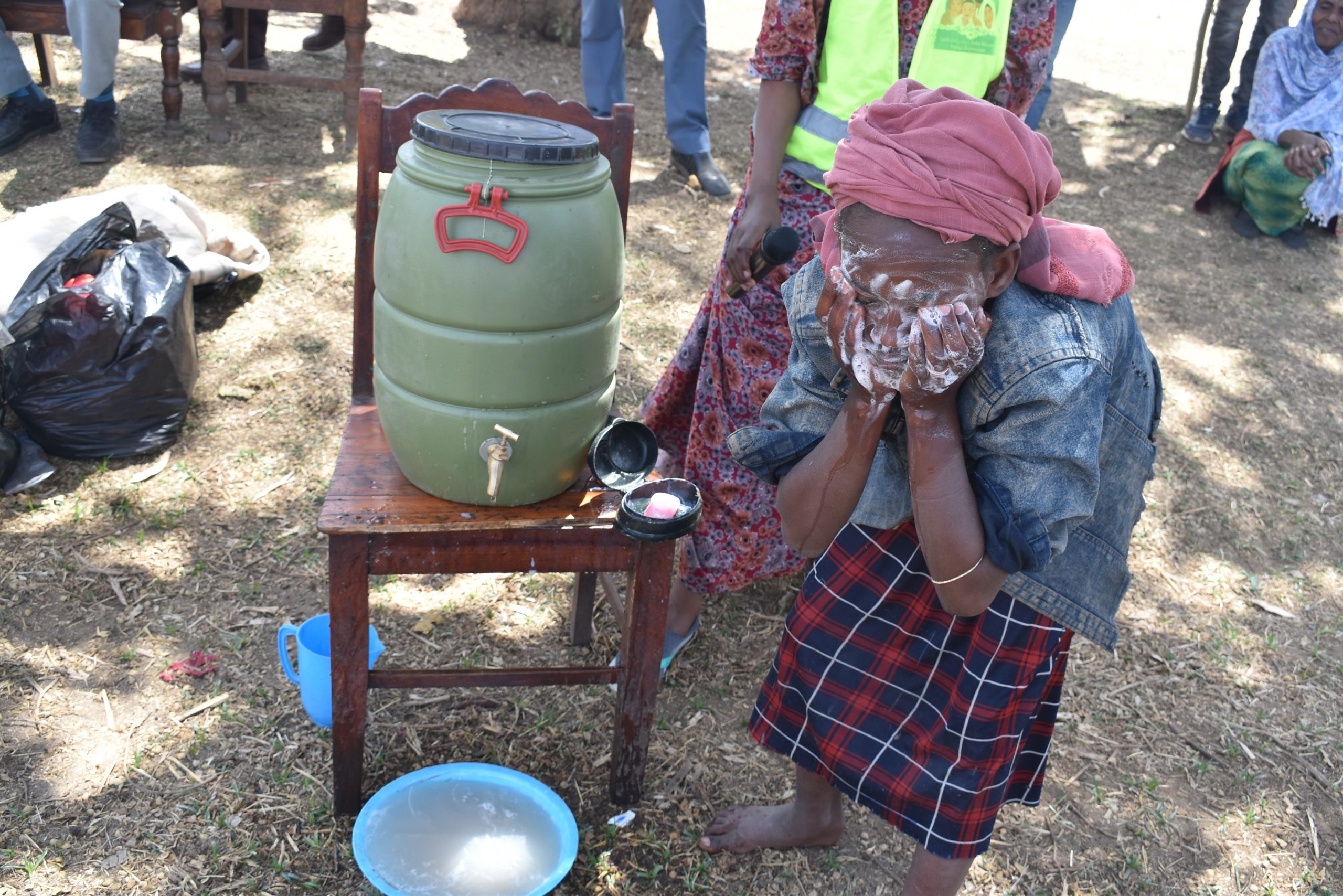
Face washing as part of the Stronger-SAFE events. © Zacharias Abubeker
Trachoma is the world’s leading infectious cause of blindness, affecting over 100 million people globally. Repeated infections with the bacterium Chlamydia trachomatis cause scarring that turns the eyelashes inward, scratching the eye and eventually leading to blindness. Despite major global efforts, 103 million people remain at risk, underscoring the urgent need for effective behavioural interventions to help stop transmission.
A new study from the International Centre for Eye Health (ICEH) describes how researchers translated formative research into a culturally resonant face-washing intervention in Oromia, Ethiopia, as part of the Stronger-SAFE randomised controlled trial. The work applied the principles of Behaviour Centred Design develop an evidence-based, community-informed intervention that promotes regular face washing — a key strategy in trachoma prevention.
The design process followed five structured stages:
- Formative Research – Researchers identified local barriers and motivators for face washing and developed a creative brief outlining who, where and when face washing should occur
- Selecting Behaviour Change Techniques – Using behavioural science frameworks, the team matched determinants of face washing to proven behaviour change methods
- Testing an Intervention Concept – Four motivational themes — love, nurture, status, and dignity — were tested with community members. The theme of dignity resonated most strongly, symbolising respect and social standing
- Developing Content – A five-day stakeholder workshop in Shashemene brought together community members, health workers, creatives, and government representatives to co-design intervention materials. Thirty-three activities were refined and piloted to ensure they were practical and engaging
- Finalisation – A comprehensive Theory of Change linked all intervention activities to desired behavioural outcomes, guiding implementation and evaluation
The resulting “Faces of Dignity” campaign used the tagline “A clean face is attractive, it is also dignifying”, accompanied by imagery celebrating clean, respected families. Local health volunteers delivered the programme across 34 rural communities between January and April 2022, using events and storytelling to encourage regular face washing, with the goal of reducing ocular and nasal discharge among children and thereby reducing transmission of the bacteria that leads to trachoma.
The authors highlight the value of documenting the whole intervention design, from formative research to final implementation, providing transparency and practical guidance for others developing behaviour change programmes. The paper also recognises that even when using structured, theory-driven frameworks, intervention design in reality can still involve significant subjective decision-making.
Developed over 22 months, despite COVID-19 challenges, Faces of Dignity represents one of the few studies that has attempted to fully document the design process of translating formative research into theory-based interventions. This can help to inform future behaviour-centred design approaches and trachoma elimination efforts.
The results of the interventions will be released soon as part of the wider Stronger-SAFE project.
Publication:
Collin C, Biran A, Czerniewska A, et al. Translating Formative Research into Intervention Content: Experiences with Face Washing for Trachoma Control in Rural Ethiopia. Behavioral Sciences. March 2025; 15(3):355. https://doi.org/10.3390/bs15030355
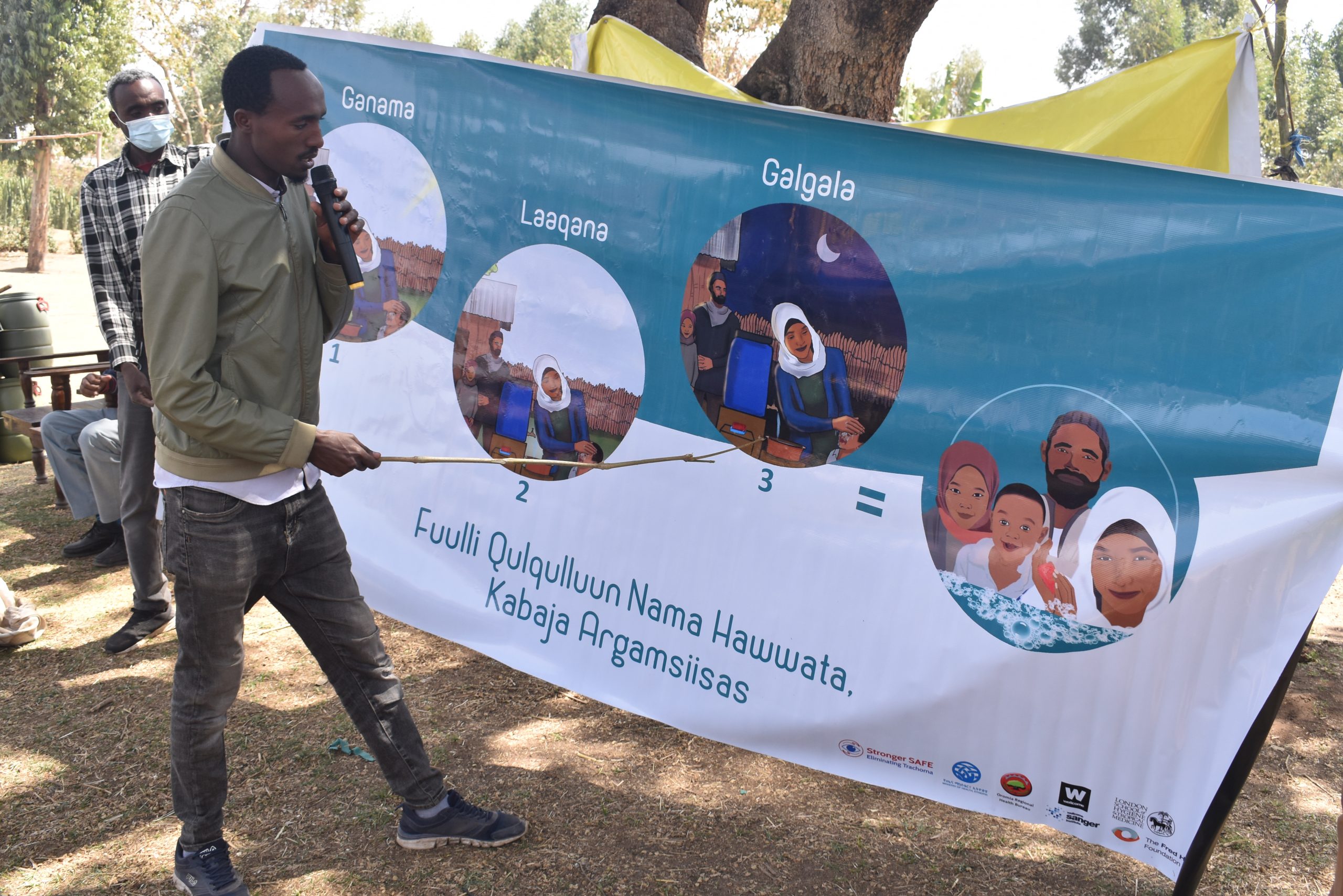
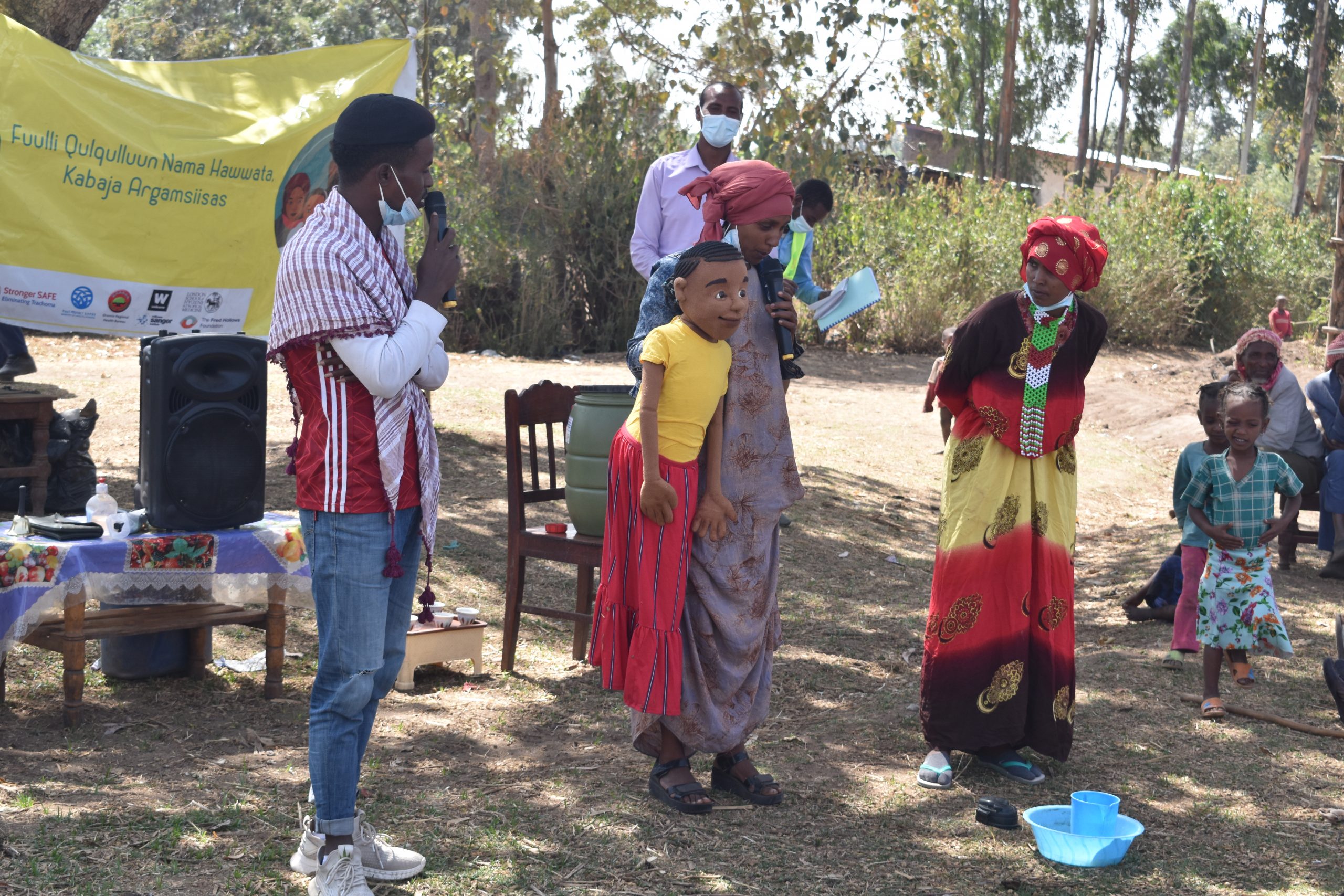
Further ‘Faces of Dignity’ Stronger-SAFE events.© Zacharias Abubeker