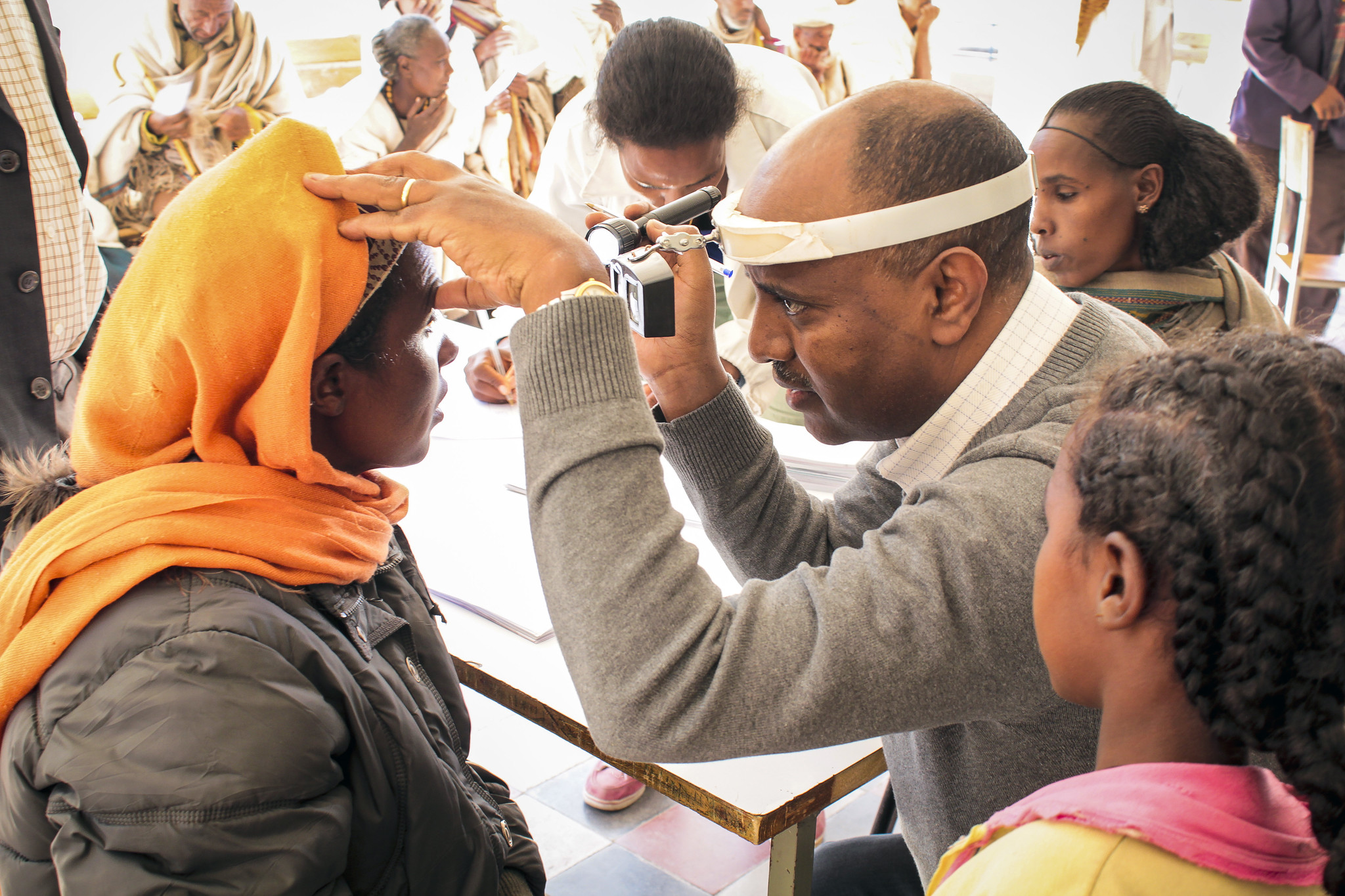
Photograph: Sasipriya M Karumanchi
A new Rapid Assessment of Avoidable Blindness (RAAB) survey has found that blindness and vision impairment remain major public health challenges in northwest Ethiopia, with more than four in five cases of blindness caused by conditions that are preventable or treatable. The findings provide important evidence to guide eye health planning in the Amhara region and highlight the need to strengthen access to quality eye care services.
The population-based survey examined 4,078 adults aged 50 years and older across West Gojam Zone and Bahir Dar City between March and August 2022, achieving a 94.8% response rate. Using the latest RAAB7 methodology, researchers assessed vision, eye health, cataract services, refractive error and disability to provide a comprehensive picture of eye health needs in the region.
The study, including authors from the International Centre for Eye Health, found that the age- and sex-adjusted prevalence of bilateral blindness was 3.0%, while 1.4% of participants had severe vision impairment, 3.1% had moderate vision impairment and 6.1% had mild vision impairment. Blindness was significantly more common among women than men, affecting 3.7% of women compared with 2.1% of men. When extrapolated to the regional population, an estimated 8,754 people aged 50 years and older were living with bilateral blindness.
Cataract remained the leading cause of blindness, accounting for 43.4% of cases, followed by glaucoma (14.8%), age-related macular degeneration (13.9%) and trachomatous corneal opacity (11.5%). Overall, 82% of blindness was avoidable, with almost half caused by untreated cataract alone. Cataract was also responsible for more than 60% of severe vision impairment, underlining the potential impact of expanding access to timely surgery.
Despite this, coverage and quality of cataract services remained low. Effective cataract surgical coverage (eCSC) at the <6/12 threshold was just 13.0%, while only 41.6% of cataract-operated eyes achieved a good presenting visual outcome (6/12 or better), increasing only slightly to 45.5% with pinhole correction. Among people with untreated cataract causing severe vision loss, the most commonly reported barriers to surgery were being unable to access treatment (28.6%), not knowing treatment was available (23.8%), and cost (15.9%).
The survey also highlighted substantial unmet need for refractive services. Nearly 80% of distance refractive error remained uncorrected, while 97.9% of participants had uncorrected presbyopia. Effective refractive error coverage was only 5.3%, indicating that many people who could benefit from spectacles were not receiving appropriate correction.
In addition to vision loss, the researchers examined disability using the Washington Group Short Set questionnaire. 5.6% of participants reported significant disability, while 3.6% reported vision-related disability, reinforcing the wider impact of poor eye health on people’s daily lives and independence.
The authors conclude that although Ethiopia has made significant progress in tackling infectious causes of blindness such as trachoma, avoidable vision loss remains unacceptably high. They call for better coordinated, people-centred eye care that expands access to high-quality cataract surgery, improves refractive services, strengthens rehabilitation and low vision care, and addresses the persistent gender inequities in access to treatment.
Publication
Degineh H, Wondie T, Adamu L … Shafi O, McCormick I, Mactaggart I, Bastawrous A, Limburg H, Burton MJ, Habtamu E. Blindness, Vision Impairment and Disability in Northwest Ethiopia: a Rapid Assessment of Avoidable Blindness (RAAB) Survey. Wellcome Open Research. June 2026. https://doi.org/10.12688/wellcomeopenres.26084.1