
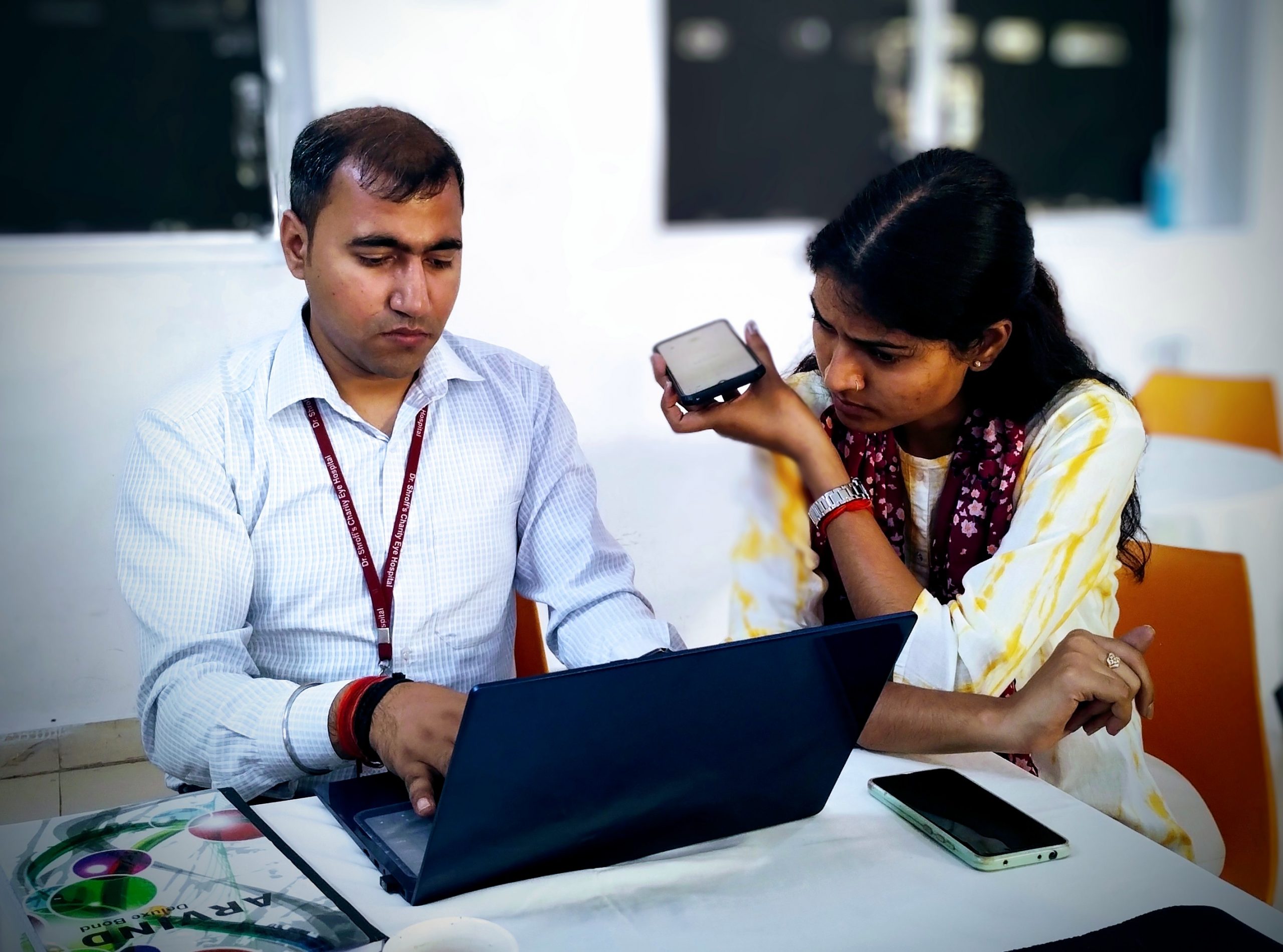
Photograph: Luke Allen
A new study from northern India has shown that teleophthalmology can enable people with corneal disease to receive specialist-supported care without travelling to hospital at scale, while ensuring that patients with sight-threatening conditions are identified and referred promptly. The findings demonstrate how telemedicine can strengthen primary eye care services and improve access to specialist expertise in rural and underserved communities.
Corneal disease is one of the leading causes of blindness among people under 50 years of age in India, yet access to specialist eye care remains limited in many rural areas. Researchers, including from the International Centre for Eye Health, evaluated a teleophthalmology service linking 112 vision centres across northern India with cornea specialists at a tertiary eye hospital. During the seven-month study period, 20,308 teleconsultations were carried out, including 4,825 patients with corneal disease.
After examination by trained vision technicians, patients’ clinical information and smartphone images of the eye were reviewed remotely by cornea specialists. Based on the teleconsultation, 2,022 patients (41.9%) were safely managed at their local vision centre, while 2,803 (58.1%) were referred to a secondary eye hospital for further care. Without teleophthalmology, all patients with suspected corneal disease would have required referral to a higher-level facility.
The study showed that many common corneal conditions could be managed successfully at the primary care level with specialist support. This included 85% of corneal foreign bodies, 81% of corneal abrasions, and 77% of epithelial defects, reducing unnecessary travel for patients while allowing hospitals to focus on more complex cases. Even among patients with corneal ulcers, 103 small ulcers were treated successfully at the vision centres under remote specialist supervision.
Patients with urgent conditions were more likely to reach hospital quickly after referral than those with non-emergency conditions. Overall, 772 of the 2,803 referred patients (27.6%) attended a secondary centre during the study period. The researchers found that patients with acute disease were almost twice as likely to complete referral as those with non-acute conditions (odds ratio 1.99). Referral uptake was also higher among patients attending longer-established vision centres, suggesting that trusted community services may encourage better engagement with care.
The study also identified factors associated with referral attendance. Patients living within 30 minutes of a secondary hospital were more likely to attend than those living 30 to 60 minutes away, while those travelling more than an hour also showed relatively high attendance, possibly reflecting fewer alternative eye care options in more remote areas. Vision centres that had been operating for more than one year achieved substantially higher referral rates than newly established centres.
The authors conclude that teleconsultation allows specialist expertise to be extended beyond hospitals, enabling trained primary eye care staff to diagnose, treat and monitor many corneal conditions locally while ensuring that patients requiring more advanced care are referred appropriately. They suggest that similar teleophthalmology models could be adopted in other ophthalmic subspecialties to strengthen people-centred eye care and improve access to services in resource-constrained settings.
Publication
Patel NV, Kataria M, Aggarwal M … Sabherwal S … Acharya M. Teleophthalmology for triage and management of corneal pathologies at vision centres: a prospective observational service evaluation study in north India. Frontiers in Ophthalmology. June 2026. https://doi.org/10.3389/fopht.2026.1867442