
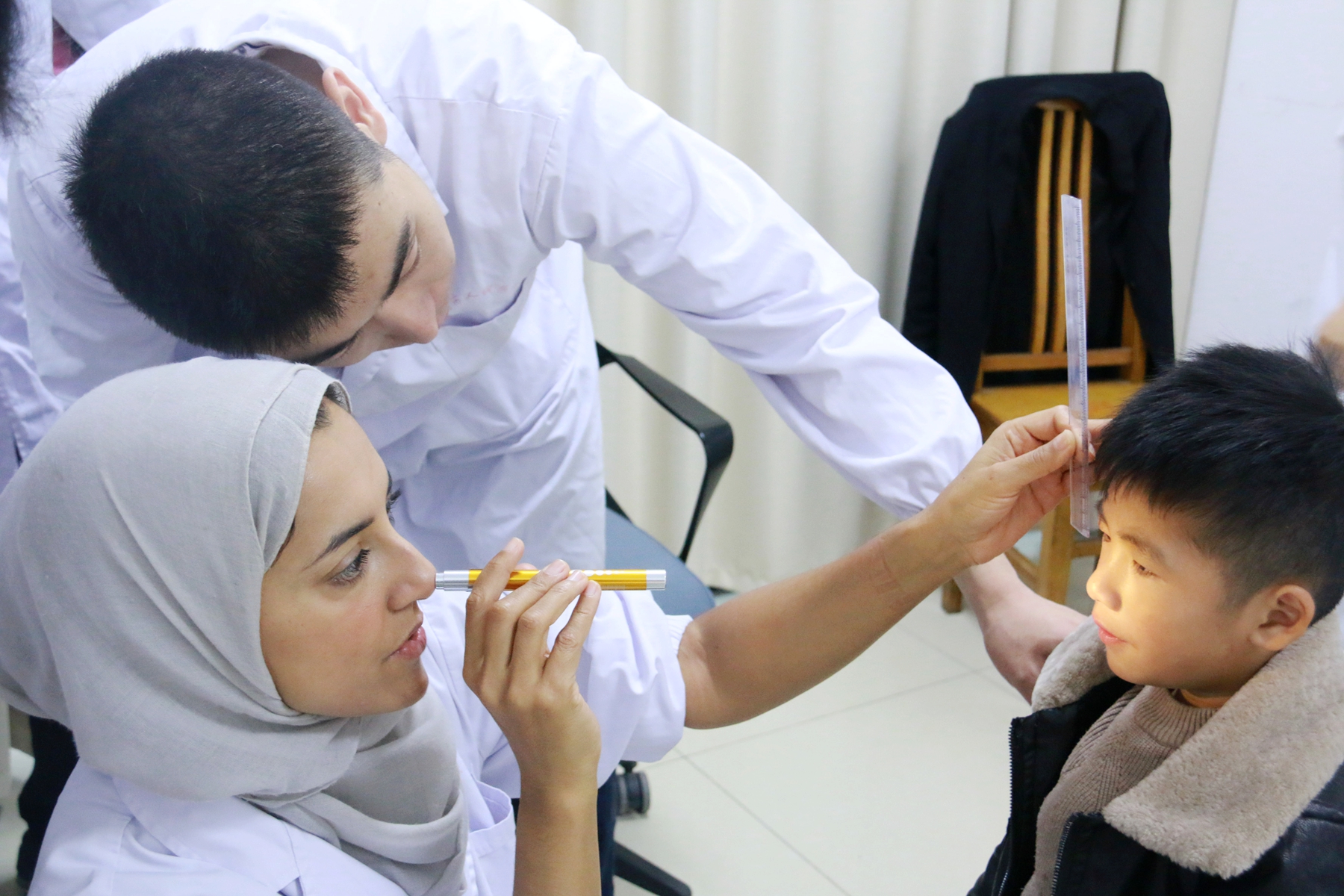
Photograph: Aeesha Malik
A new study has revealed substantial differences in how children receive eye examinations in Malaysia, with regulatory and institutional barriers limiting the use of cycloplegic refraction in many settings. The findings suggest that children attending private eye care services may be less likely to receive assessments needed to accurately diagnose refractive errors and guide treatment.
Cycloplegic refraction temporarily relaxes the eye’s focusing muscles, allowing eye care professionals to accurately measure children’s vision. It is widely recommended for detecting conditions including latent hyperopia, amblyopia and accommodative esotropia, while also supporting effective myopia management. Without cycloplegia, children may receive inaccurate prescriptions or have important eye conditions missed.
Researchers, including from the International Centre for Eye Health, surveyed 222 ophthalmologists, optometrists and opticians working across public and private eye care services within 50 kilometres of Kuala Lumpur to understand how paediatric refraction is carried out and what barriers professionals face. The study found striking differences between sectors.
Among children aged 5–9 years, 82.3% of public-sector optometrists routinely used cycloplegia, compared with just 15.7% of private-sector optometrists. The researchers calculated that public-sector optometrists were almost 25 times more likely to use cycloplegia than their private-sector counterparts for this age group.
The survey also found that private opticians never used cycloplegia, reflecting legal restrictions on their scope of practice, while 79.5% of private optometrists who did not use cycloplegia said they believed it was prohibited by law. In contrast, public-sector professionals generally had access to cycloplegic drugs through hospitals or their employers, allowing them to provide more comprehensive paediatric eye examinations.
The findings highlight how the organisation of eye care services can affect children’s access to appropriate care. Public hospitals commonly separate responsibilities between ophthalmologists and optometrists, with optometrists carrying out refractions while ophthalmologists focus on diagnosing and treating eye disease. However, public facilities often do not dispense spectacles, meaning families may still need to visit private optical providers after diagnosis. Meanwhile, many private practitioners reported limited access to cycloplegic drugs because of regulatory uncertainty surrounding their use.
The authors argue that these fragmented pathways can delay treatment and create inequities in access to high-quality paediatric eye care. They recommend improving access to cycloplegic agents for appropriately trained professionals, clarifying legal and professional responsibilities, and strengthening collaboration between public and private providers to ensure children receive accurate refractive assessments regardless of where they seek care.
The study also notes that Malaysia introduced new guidance in 2025 allowing registered optometrists who have completed additional training to use specific diagnostic eye drops under defined conditions. While this does not fully resolve existing regulatory ambiguity, the authors suggest it represents an important step towards more consistent paediatric eye care and could support wider policy reform in the future.
Publication
Bin Hashim E, Waheeda-Azwa H, Mokhtar A, Morjaria P. Paediatric refraction practices: access to cyclopegia, barriers, and disparities among eye care professionals in Kuala Lumpur. BMC Pediatrics. June 2026. https://doi.org/10.1186/s12887-026-07069-x