
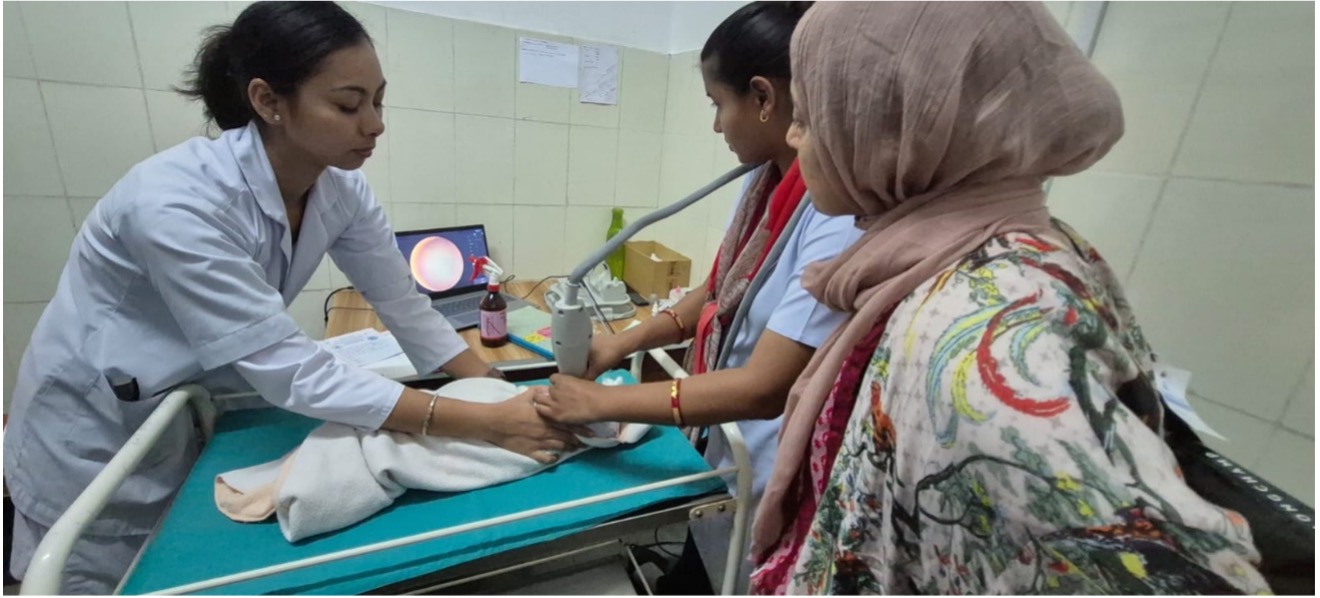
A growing partnership between the International Centre for Eye Health (ICEH), Nepal Netra Jyoti Sangh (NNJS) and eye hospitals across Nepal is helping to strengthen the detection and treatment of retinopathy of prematurity (ROP), a leading cause of preventable childhood blindness.
During a recent annual project workshop in Kathmandu and a subsequent visit to Biratnagar Eye Hospital, researchers, clinicians and programme leaders reviewed progress from one of Nepal’s largest ROP research programmes and planned the next phase of work, which will expand both the evidence base and access to care.
The project, led by NNJS in collaboration with ICEH and partners, is evaluating new approaches to ROP screening using artificial intelligence and low-cost retinal imaging technologies. Alongside this, researchers are developing clinical prediction models and studying how to improve screening pathways and follow-up for premature babies across Nepal.
At the annual workshop, investigators presented interim findings from 305 babies enrolled across four hospitals. The data highlighted a substantial burden of disease, with 36.5% of infants developing ROP and 22.1% requiring treatment, the highest rates yet reported in Nepal. The meeting also identified one of the programme’s greatest challenges: ensuring babies continue attending follow-up appointments after their initial screening. Of the 305 babies seen at their first examination, only 44 remained in follow-up by the fourth visit.
Discussions throughout the workshop focused on practical solutions, including improved counselling for parents, automated appointment reminders, stronger referral systems and greater involvement of community health workers. Participants also agreed priorities for the next phase of research, which will include validating AI-assisted diagnosis, evaluating a new low-cost smartphone-based retinal camera and developing tools to predict which babies are most at risk of severe disease.
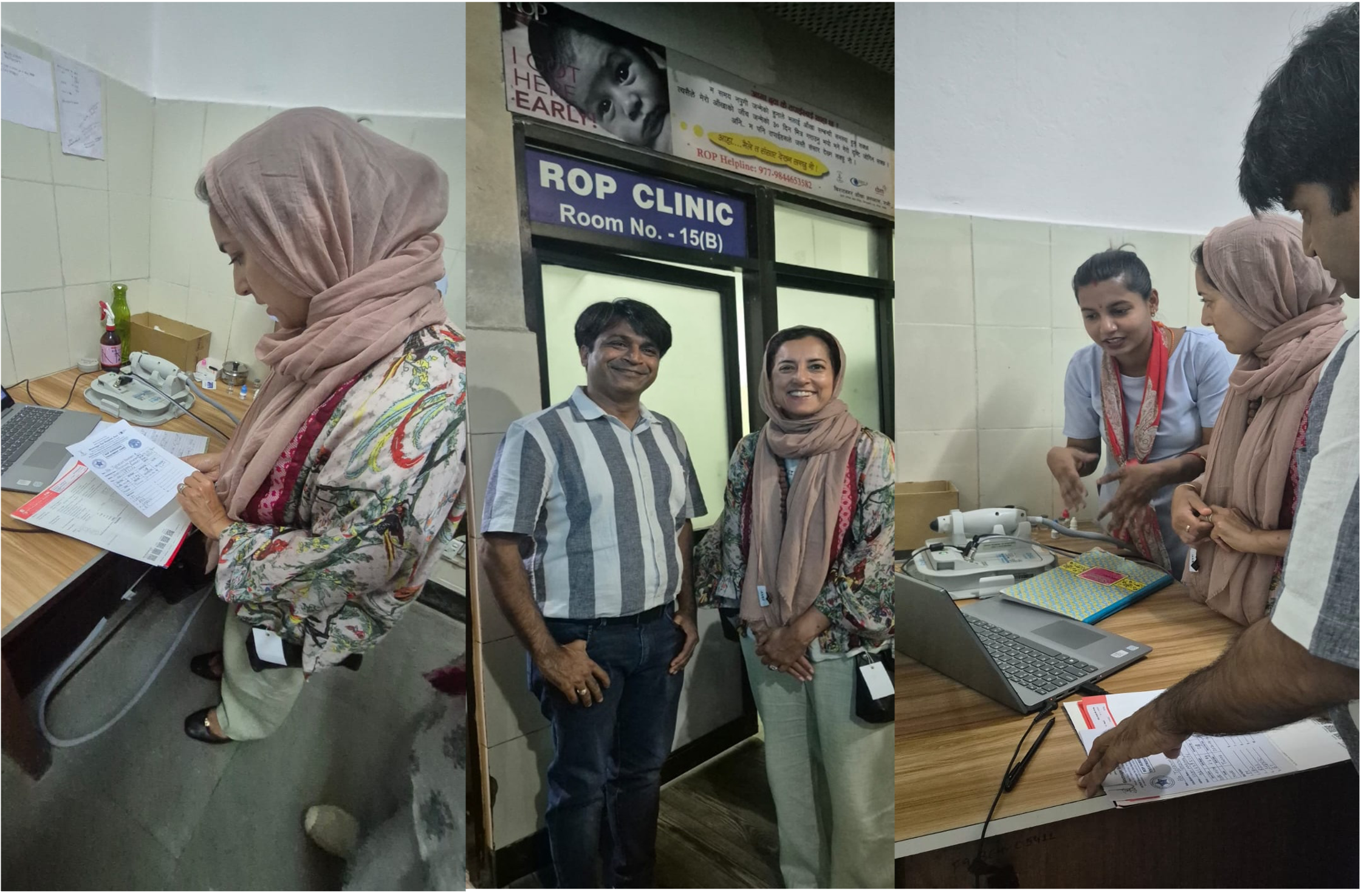
One of the actions from the workshop is to replicate the ongoing implementation research project in three further hospitals: Biratnagar Eye Hospital, Lumbini Eye Institute, and Himalaya Eye Hospital to evaluate implementation approaches across different service delivery settings and generate evidence for national scale-up.
With this in mind, prior to the workshop, the ICEH and NNJS team visited Biratnagar Eye Hospital to explore opportunities to extend the programme beyond Kathmandu. The visit assessed the hospital’s ROP services, staffing, equipment and data systems. The team also reviewed clinical workflows and discussed opportunities to strengthen data recording and reporting systems as part of future work.
Expanding to Biratnagar forms an important part of the project’s second phase, which aims to evaluate how innovative ROP screening approaches can be implemented successfully across different healthcare settings. Alongside AI validation and new imaging technologies, researchers will examine how health systems can improve screening coverage and reduce the number of babies lost to follow-up.
The collaboration reflects ICEH’s commitment to working alongside international partners to generate evidence that strengthens health systems as well as developing new technologies. By combining implementation research, clinical expertise and digital innovation, the partnership aims to support earlier diagnosis, more consistent follow-up and better outcomes for premature babies across Nepal.
Find out more about the partnership between our two centres here: https://iceh.lshtm.ac.uk/nepal-netra-jyoti-sangh-partner-story/