
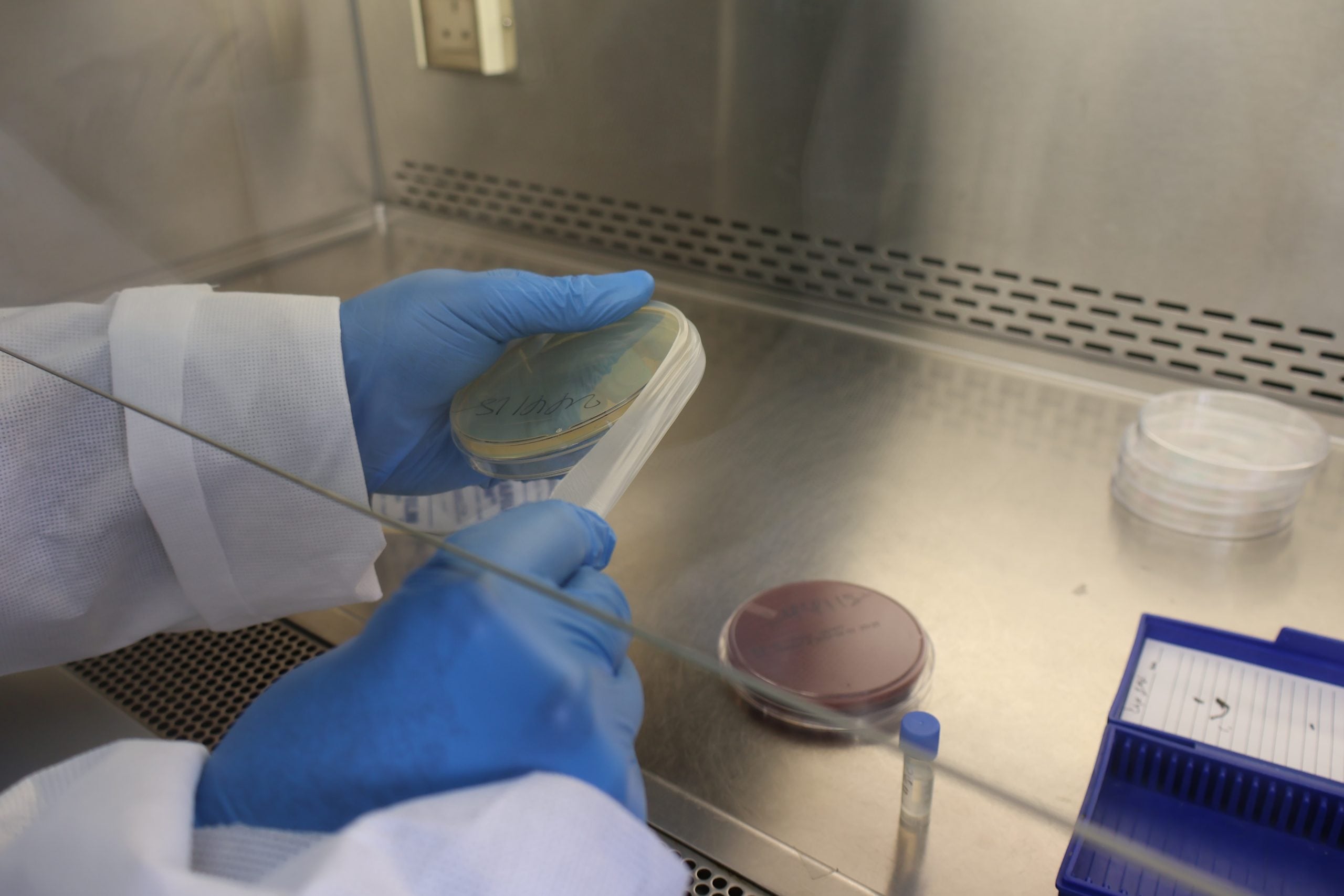
Testing for microbial keratitis Photograph: Hugh Bassett
A new study involving researchers from the International Centre for Eye Health (ICEH) has identified significant gaps in the recognition and management of serious eye infections among community pharmacy workers in Nepal, highlighting opportunities to improve training and referral systems.
Published in Wellcome Open Research, the study surveyed 152 pharmacy attendants in Siraha district, southeastern Nepal, where pharmacies are often the first point of contact for people experiencing eye problems.
The research focused on microbial keratitis, an infection of the cornea that can cause permanent vision loss or blindness if treatment is delayed. The condition is particularly common in parts of South Asia, where eye injuries, agricultural work and limited access to specialist care contribute to its burden.
Researchers from Sagarmatha Choudhary Eye Hospital, ICEH and collaborating institutions surveyed pharmacy attendants and conducted interviews and focus groups to investigate their knowledge, treatment practices and approaches to referring patients.
They found that 87.5% had received no training in eye care, while only 8.5% specifically identified a corneal ulcer when shown a photograph of an infected eye. Overall, 25% recognised signs of a corneal ulcer or infection.
The study also identified potentially harmful misconceptions about steroid eye drops. Although these medicines have legitimate uses, they can worsen certain corneal infections. 73.3% of respondents believed steroids should be used to reduce eye redness, while 69.2% thought they should be used to treat a painful eye.
Despite these gaps, most pharmacy attendants recognised the importance of referring patients with potentially serious eye conditions. 92.7% acknowledged the need to refer patients experiencing symptoms such as eye pain, redness and sensitivity to light.
However, many expressed limited confidence in local health posts, citing concerns about staff training, equipment and medicine availability. Some reported providing treatment before referring patients, potentially delaying access to specialist care.
Pharmacy attendants were receptive to improving their practices, with 72.8% identifying training as the most useful support. They also highlighted the need for clearer referral guidance, better communication between pharmacies and health facilities, and greater community awareness of serious eye conditions.
The researchers conclude that community pharmacies could play an important role in preventing avoidable blindness through improved recognition of microbial keratitis and timely referrals. They recommend strengthening partnerships between pharmacies, health posts and specialist eye hospitals, alongside better training and regulation of medicine sales.
The study also forms part of wider research in Nepal, including a trial evaluating the use of smartphone-based Peek technology to improve the detection, treatment and referral of microbial keratitis.
Publication
Yadav R, Sanyam SD, Ahmed AHAM, Macleod D, Arunga S, Ebong A, Leck A, Roshan A, Singh SK, Mishra SK, Hoffman JJ, Burton MJ, Mtuy T. Microbial keratitis management through the lens of pharmacy attendants in Siraha district of Nepal: A study of knowledge, attitudes, and practices. Wellcome Open Research. September 2026. https://doi.org/10.12688/wellcomeopenres.26504.1