
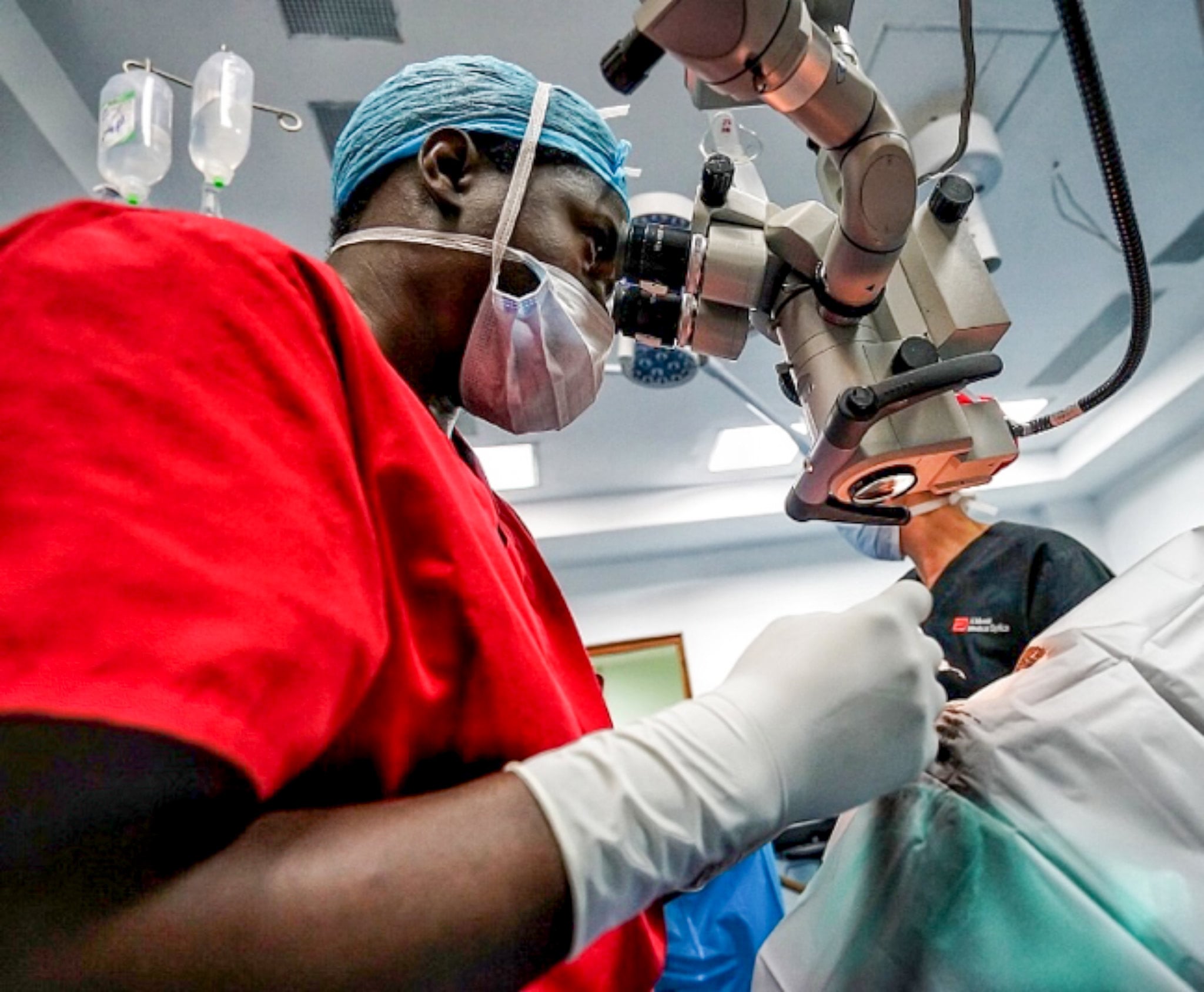
A doctor performs cataract surgery in Tanzania © Frank Albert Sandi
A new editorial involving researchers from the International Centre for Eye Health (ICEH) argues that traditional measures of cataract surgery success may no longer adequately reflect the benefits experienced by patients.
Published in Eye, the editorial questions the continued reliance on visual acuity (VA), particularly in high-income countries where many patients undergo cataract surgery before experiencing substantial vision loss.
The authors highlight that more than half of patients in a recent US study already had vision of 6/12 or better before surgery, the threshold commonly used to define a successful postoperative outcome. This raises questions about whether reaching that threshold is an appropriate measure of success.
Instead, the authors advocate greater use of patient-reported outcome measures (PROMs), which assess improvements in everyday visual function, symptoms and quality of life.
While visual acuity remains important for monitoring surgical outcomes and identifying complications, it may not capture improvements in problems such as glare or difficulties with daily activities.
The editorial highlights how incorporating PROMs into routine clinical audits could provide a more complete picture of surgical quality, support better patient counselling and help identify people whose experiences differ from their clinical results.
The authors conclude that cataract surgery outcomes should increasingly reflect what matters to patients, alongside established clinical measures.
Publication
Burkland J, Woo N, Buchan J, Burdon M. Postoperative visual acuity: an appropriate measure of cataract surgical failure, but no longer for success? Eye. October 2026. https://doi.org/10.1038/s41433-026-04973-5