
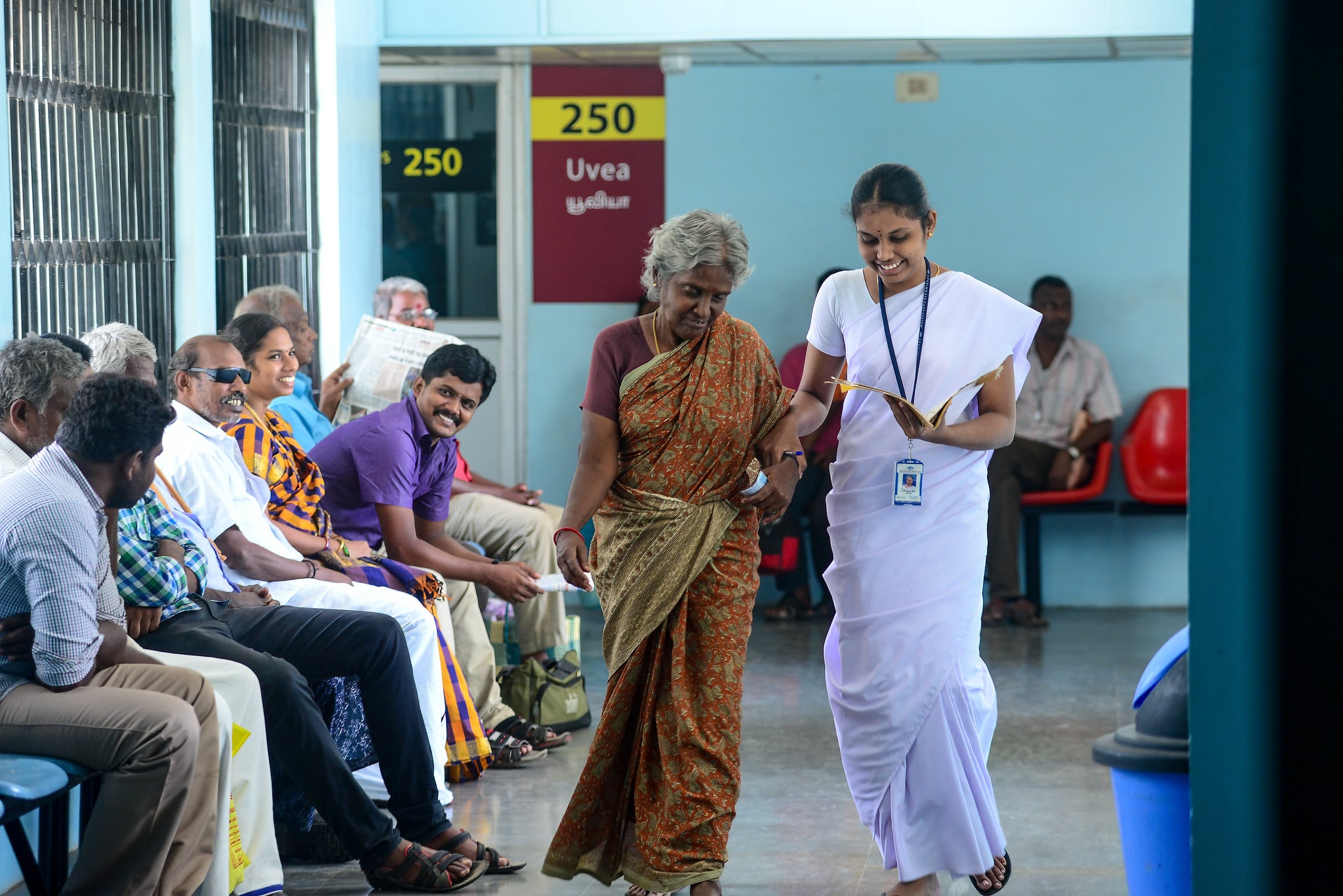
A new study involving researchers from the International Centre for Eye Health (ICEH) has found that financial concerns, family support and personal perceptions of vision problems play an important role in determining when people seek eye care in southern India.
Published in Eye, the research examined the experiences of 158 patients attending seven primary eye care centres operated by Sankara Eye Hospital across three districts of Tamil Nadu, India.
The study, led by researchers from ICEH and Sankara Eye Foundation, combined patient questionnaires with in-depth interviews to understand what encourages people to seek treatment, what causes delays and how services could be made more accessible.
Researchers found that patients often postponed seeking care until their vision problems significantly affected everyday activities. Some believed their symptoms would improve without treatment, while others were concerned about the potential cost of spectacles, medication or surgery.
The length of these delays varied considerably depending on the condition. Patients attending for spectacle reviews reported waiting an average of 300 days after first noticing symptoms, compared with 90 days for cataracts and presbyopia, and just two days for foreign bodies in the eye.
Despite these delays, 81% of participants said their local vision centre was easy to access, with many citing its proximity to their homes. Patients travelled a median distance of four kilometres, suggesting that geographical accessibility alone does not guarantee timely attendance.
Social influences were particularly important. Recommendations from friends, family and previous patients were a major reason for seeking care, with positive experiences helping to build confidence in local services.
The researchers also identified differences in how patients accessed care. Women were significantly more likely than men to attend with a companion, an association that remained after accounting for age and education. People with lower educational attainment were also more likely to pay for transport, potentially creating additional financial barriers.
The findings suggest that improving access to primary eye care requires more than establishing services close to communities. The researchers recommend strengthening community awareness, communicating the affordability of services and encouraging existing patients to share their experiences with others.
They also highlight the potential value of community advocates, patient testimonials and local communication networks in encouraging earlier attendance.
The authors note that the study involved a relatively small number of patients who had already accessed services, meaning the experiences of those who never attend remain an important area for further research.
Understanding these perspectives could help eye care providers develop more effective approaches to reaching underserved communities and reducing delays in treatment.
Publication
Natarajan N, Balasubramanian B, Hameed S, Morjaria P. Health seeking behaviours of those accessing primary eye care services in Tamil Nadu, India. Eye. September 2026. https://doi.org/10.1038/s41433-026-04829-y