A new feasibility trial published in BMJ Open suggests that prescribing near-vision glasses to very young infants at high risk of cerebral visual impairment (CVI – sight loss due to damage in the brain rather than the eye itself) may improve early visual and developmental outcomes. The study provides the first evidence that such an intervention is both feasible and acceptable for families, and could pave the way for a larger clinical trial.
CVI is now one of the leading causes of childhood visual impairment in the UK and is particularly common in infants born very prematurely or following hypoxic ischaemic encephalopathy (HIE), a form of neonatal brain injury caused by lack of oxygen. Although glasses are commonly prescribed later in childhood for children with CVI, this study explored whether intervening much earlier, during a critical period of visual development was feasible and could potentially improve outcomes.
The Babies in Glasses (BiG) trial, including researchers at the International Centre for Eye Health, recruited infants born before 29 weeks of gestation or born at term with HIE at a tertiary neonatal intensive care unit in London. At 8 weeks corrected age (adjusted for the amount of time born early), infants were randomised either to receive near-vision glasses immediately, receive the same glasses at 16 weeks, or receive standard care without glasses. In total, 28 infants completed the study.
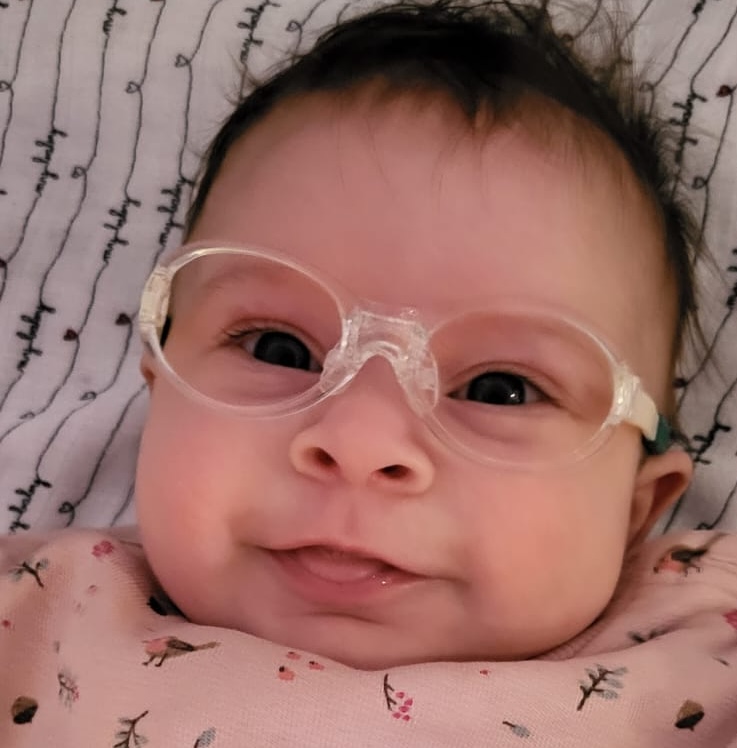
The glasses were designed to improve focus at close range during infancy, when visual interaction with caregivers, faces, and hands is important for development. Parents reported good acceptability, and all infants in the intervention groups were successfully fitted with glasses. Median wear time was approximately 2 hours per day in both intervention groups. Importantly, the study reported no harms or safety concerns associated with spectacle wear.
Although the study was not designed to demonstrate definitive clinical benefit, the results suggested encouraging trends.
Infants who received glasses at 8 weeks showed the greatest improvement in visual acuity over the study period. Mean LogMAR acuity improvement (a measure of visual function) from baseline to 6 months post-term age was 0.66 in the early-glasses group, compared with 0.47 in the standard-care group and 0.37 in the delayed-glasses group. Among very preterm infants alone, the early-intervention group again showed the strongest improvement.
The study also found possible developmental benefits. At final assessment, 56% of infants in the early-glasses group demonstrated “fully covered object permanence” compared with 29% in the standard-care group. Object permanence refers to an infant understanding that an object still exists even when hidden, an important stage in visual and cognitive development.
The authors note that the study faced practical challenges, particularly around follow-up visits for families already managing complex neonatal care. However, recruitment and retention were considered sufficiently strong to support a larger definitive trial. They also suggest future research should focus primarily on very preterm infants, who formed the majority of participants and appeared to show the greatest potential benefit from early intervention.
The researchers conclude that early near-vision correction in infants at risk of cerebral visual impairment is feasible and may enhance both visual and developmental outcomes. If confirmed in a larger trial, the approach could represent a simple and relatively low-cost intervention during a critical period of early childhood development.
Publication
Bullaj R, Dyet L, Mitra S, Bunce C, Clarke CS, Saunders K, Dale N, Horwood A, Williams C, St Clair Tracy H, Marlow N, Bowman R. Can provision of near vision glasses as an early intervention improve visual outcomes in infants at risk of perinatal brain insult? The Babies in Glasses (BiG) randomised feasibility trial. BMJ Open. February 2026. https://doi.org/10.1136/bmjopen-2025-107894