
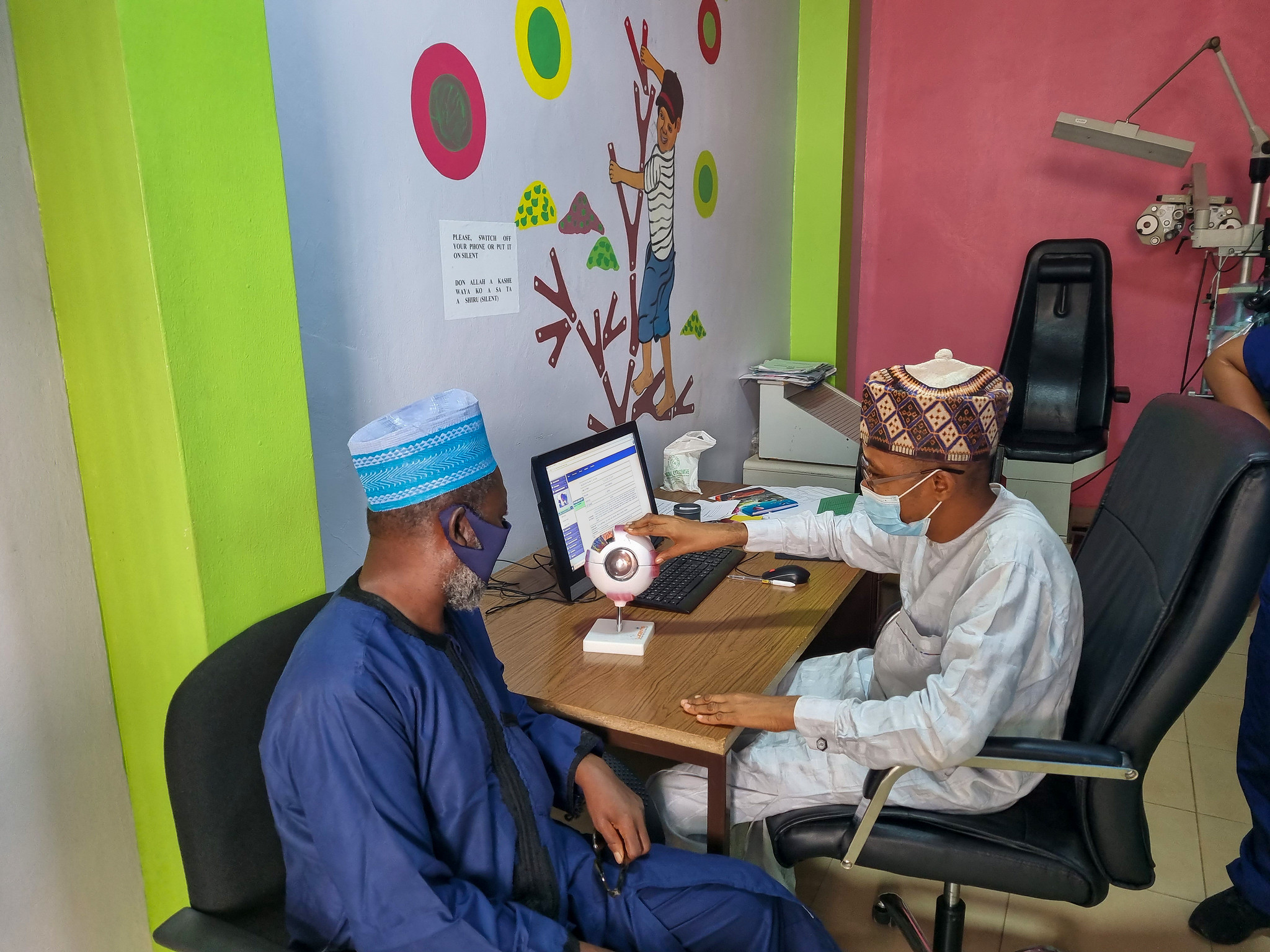
Counselling for glaucoma. Photograph: Bintu Lamba
A new study from researchers in Nigeria and the International Centre for Eye Health (ICEH) has found that people who were aware of glaucoma before diagnosis were more likely to present earlier for specialist care. However, many patients still experienced delays after screening, highlighting the need for stronger referral pathways, community awareness and health system improvements to reduce avoidable blindness.
Glaucoma is the leading cause of irreversible blindness worldwide and disproportionately affects people of Black African descent. Because the disease often develops without symptoms until vision has already been lost, early detection and treatment are essential to preserving sight. The study explored the awareness and healthcare journeys of 303 newly diagnosed glaucoma patients attending three referral hospitals in south-east Nigeria to better understand the factors associated with early and late presentation.
Just under half of participants (49.8%) had heard of glaucoma before they were diagnosed. Among those who were already aware of the condition, 57.6% presented early to a referral hospital. In contrast, 61.2% of participants who had not previously heard of glaucoma presented late, supporting an association between prior awareness and earlier access to specialist care.
The findings also suggest that awareness alone is not sufficient to ensure timely treatment. Around one-third of participants had previously undergone glaucoma screening, and 51% of those who ultimately presented late had already been screened before reaching a referral centre. Among screened participants, 65% attended the referral hospital within one year, while others experienced much longer delays. The authors suggest this highlights opportunities to strengthen referral systems and follow-up after screening.
The study provides valuable insight into the routes patients take before receiving specialist care. Participants who presented late were more likely to spend prolonged periods seeking care through optical stores, pharmacies, spiritual homes or traditional healers before attending a referral hospital. The authors suggest these findings reflect the complex care pathways that many patients navigate before receiving a definitive diagnosis.
The research also identifies opportunities to improve public awareness. Among participants who had heard of glaucoma before diagnosis, 57% first learned about the condition through friends or family, making interpersonal communication the most common source of information. Radio, television and print media accounted for 31%, while only 4% cited the internet. These findings suggest that community networks and traditional media remain important channels for glaucoma awareness in south-east Nigeria.
Socioeconomic factors were also associated with when people sought specialist care. After adjusting for age and sex, participants who were able to read and write had significantly lower odds of presenting late (adjusted OR 0.18), while those who were able to pay rent also had lower odds of late presentation (adjusted OR 0.52). The authors suggest that literacy and socioeconomic circumstances may influence how people recognise the need for care and navigate the health system.
The authors conclude that reducing glaucoma-related blindness will require more than raising awareness alone. They recommend strengthening referral pathways following screening, supporting community-based awareness initiatives, improving patient education, and engaging trusted local networks to encourage earlier presentation for specialist care. Together, these measures could help more people receive treatment before irreversible vision loss occurs.
Publication
Onyia O, Achigbu E, Ejiakor I … Bunce C, Bascaran C. Awareness and care journey of Glaucoma patients attending three referral hospitals in South-East Nigeria: Implications for public health intervention. International Ophthalmology. January 2026. https://doi.org/10.1007/s10792-026-03968-1