
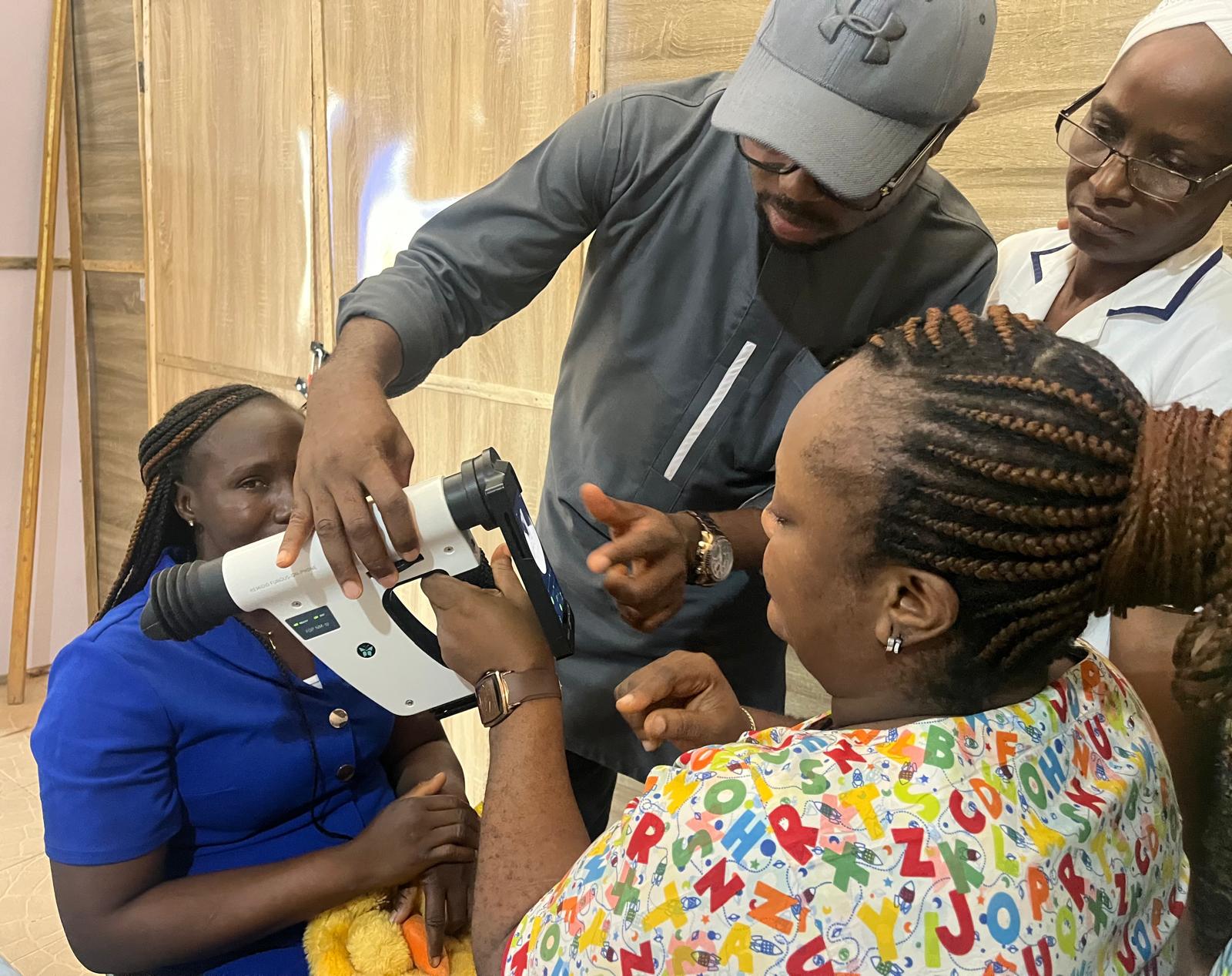
Glaucoma is one of the leading causes of irreversible blindness worldwide and early diagnosis remains critical for preventing vision loss. Traditional diagnostic equipment such as slit lamps and standard visual field analysers are accurate but often expensive and require specialist clinicians, limiting access in low-resource settings.
A new scoping review by International Centre for Eye Health researchers, published in BMJ Open, offers a comprehensive overview of the available evidence on portable devices for glaucoma diagnosis, highlighting the promise and limitations of emerging technologies that could broaden access to eye care.
The authors systematically searched academic literature to identify studies evaluating portable or handheld devices designed to support glaucoma diagnosis. These include smartphone-based tools, portable tonometers, handheld fundus cameras, and other compact imaging systems that measure key clinical parameters such as intraocular pressure, optic nerve head structure, and visual field indicators.
The review identified 216 studies published between 1975 and 2024 that evaluated portable diagnostic tools across three key domains: intraocular pressure (IOP) measurement, visual field assessment, and fundus imaging. The vast majority (90.3%) were method agreement studies designed to compare portable devices against gold standard diagnostics such as Goldmann Applanation Tonometry for IOP or the Humphrey Field Analyzer for visual fields. Only two studies (0.9%) evaluated devices that incorporated all three assessment modalities in the same investigation, underscoring a major evidence gap.
Geographically, most research originated from high-income countries, with only a small proportion conducted in low- and middle-income settings — an important limitation given the high glaucoma burden in underserved regions.
One of the key motivations behind this review is the recognition that glaucoma services are often unavailable in rural or underserved areas, partly due to the cost and infrastructure requirements of conventional diagnostic equipment. Portable devices have the potential to overcome these barriers by enabling frontline health workers, non-specialist clinicians, or community screeners to perform essential assessments outside traditional clinics. Early detection facilitated by such devices could lead to timely referral and treatment, ultimately reducing the burden of glaucoma-related vision impairment.
The studies included in the scoping review varied widely in design, device type, and setting, reflecting a field still in its early stages. Some devices showed promising accuracy and usability in detecting signs associated with glaucoma, particularly when combined with training and protocols adapted to low-resource environments. However, the review also found substantial gaps in the evidence: many devices have been evaluated only in small or single-site studies, and few have been rigorously compared with gold-standard clinical diagnostics in diverse populations.
Importantly, the authors highlight that while portable technologies may offer practical advantages, their effectiveness must be assessed not only in research settings but also in routine practice, including considerations of training requirements, cost-effectiveness, and integration with existing care pathways. There are also questions about equitable access to the underlying hardware — for example, whether smartphone-based assessments perform consistently across different device models and environmental conditions.
By compiling and analysing the current body of research, this scoping review provides a roadmap for future studies and helps policymakers and programme planners understand where portable diagnostic tools might fit into broader glaucoma case-finding and screening strategies. As eye health systems strive to expand coverage in underserved regions, evidence-based innovation in portable diagnostics could play an important role — but it will need stronger and more consistent evidence to guide implementation at scale.
Publication
Garba F, Kyari F, Burton MJ et al. Portable devices for the diagnosis of glaucoma: a scoping review. BMJ Open. October 2025. https://doi.org/10.1136/bmjopen-2025-105681