Oculomics
Background
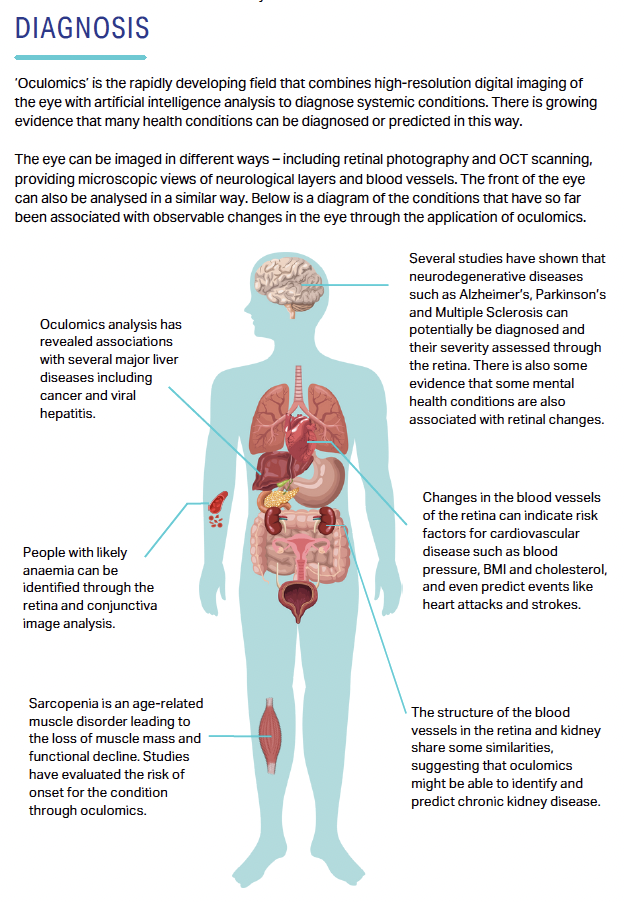
Oculomics is the study of relationships between the eyes and overall bodily health/disease. Changes in the eyes, particularly in the back of the eye (retina) can be associated with other diseases in the rest of the body, potentially predicting and diagnosing them, leading to earlier treatment or prevention.
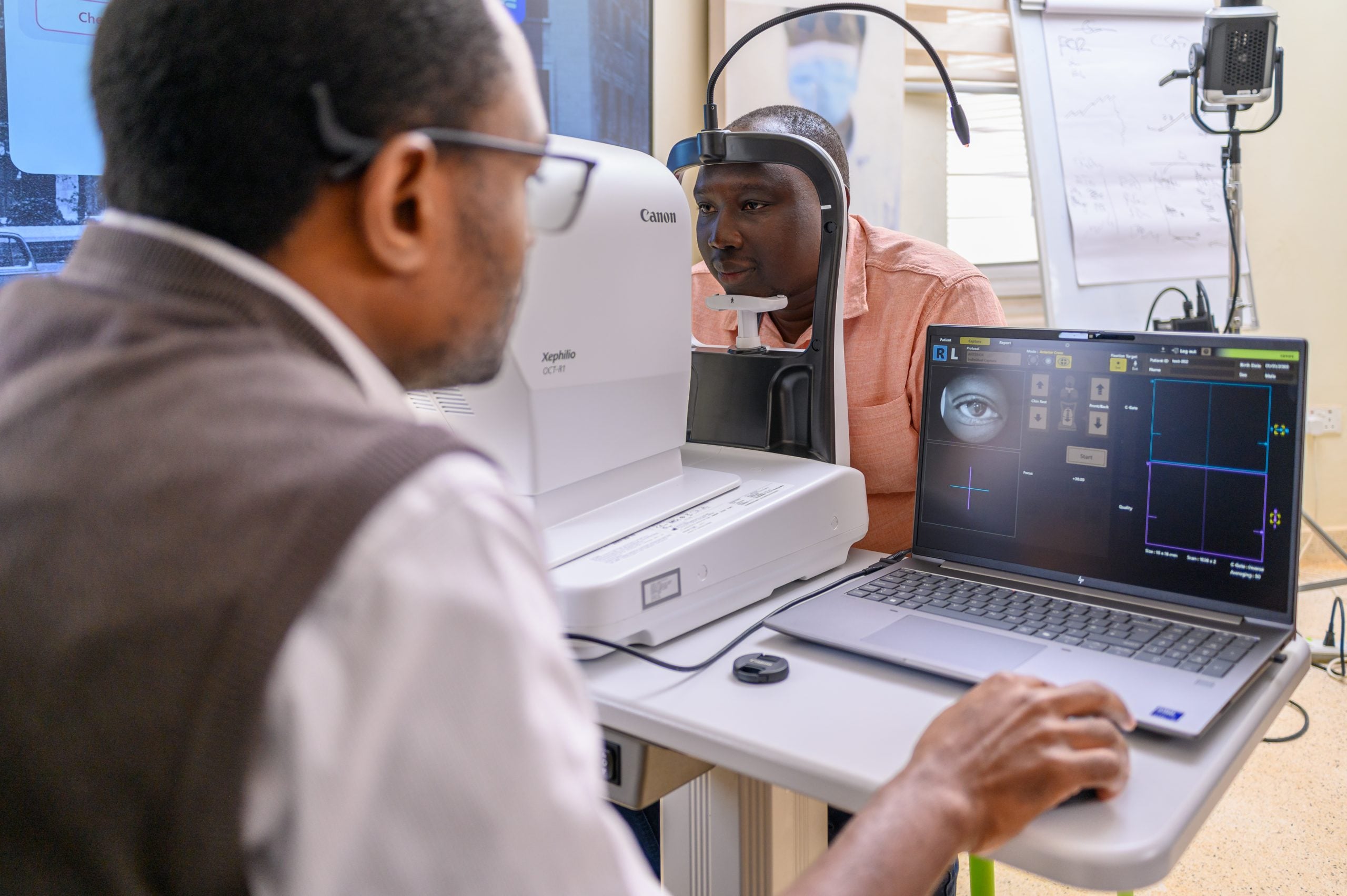
The development of oculomics is being transformed by advances in high-resolution ocular digital imaging (colour fundus photography [CFP], retinal optical coherence tomography [R-OCT], OCT angiography [OCT-A]) coupled with rapid advances in AI research to analyse images.
Oculomics has enormous potential to identify and track markers for systemic diseases, which can be diagnostic, prognostic and/or predictive. It is already showing strong promise in non- African populations for identifying and/or predicting many NCDs, including cardiovascular disease, renal impairment, liver disease, sarcopenia, mental health conditions, Alzheimer’s disease Parkinson’s disease, and pregnancy associated hypertension.
African populations have received far less attention than others from AI research in ophthalmology and medicine generally – yet this region might benefit the most. A major obstacle is scarcity of large, labelled image collections to train “traditional” AI models.
The Study
The Africa Oculomics Research Programme aims to improve health outcomes for African populations by studying the connection between eye health and overall systemic health. It will be one of the largest and most detailed prospective oculomics study globally.
Key Details
• Proposed Duration: 96 months (8 years)
• Start Date: March 1, 2026
• Research Location: Uganda & UK
Objectives
1. To conduct longitudinal ocular imaging (retinal image) and Non-Communicable Disease (NCD) studies within Uganda’s General Population Cohort (GPC)
2. Optimize AI foundation models for ocular image analysis tailored to African populations
3. Investigate associations between ocular biomarkers and NCDs for diagnostic, prognostic, and predictive purposes
4. Assess the clinical utility of oculomics in general healthcare settings
Research Approach
The study will be nested within the GPC in Uganda, a well-established cohort of ~12,000 adults. Over 5 years, it will assess the changes in ocular markers and retinal images in the cohort, and then match these to changes in their general health (for cardiovascular, renal, and liver disease, stroke, neurodegeneration, mental health, peripheral neuropathy and musculoskeletal disorders).
It will also use genetic data to make further associations between ocular changes and diseases and deepen understanding of the interplay between them. AI models, including RETFound, will be fine-tuned and validated using the collected data for the analysis. The project will also explore how the findings and associated tools can be used in real-world settings in the project area to diagnose conditions using cost-effective imaging and AI.
Capacity Strengthening
The program will offer:
• Two PhD studentships for African clinicians
• Career development opportunities for postdoctoral scientists
• Training in data science and AI
• Research opportunities for MSc/MPH and other PhD students from local universities
Partners
The project involves a multidisciplinary team from LSHTM, MRC Uganda, Makerere University, and UCL Institute of Ophthalmology. Key team members include experts in ophthalmology, AI, NCDs, obstetrics, mental health, and genomics.
Expected Outcomes
The project aims to:
• Develop AI models tailored to African populations for diagnosing NCDs and ocular conditions
• Identify predictive ocular biomarkers for systemic diseases
• Apply oculomics in healthcare settings using affordable imaging technology
• Contribute to discovery science, including insights into disease mechanisms and new treatment targets
Outputs
The project will generate ocular imaging datasets, AI models, and statistical analyses, which will be made available under open-source licenses for non-commercial use. Data will be stored securely and shared under FAIR principles.
Funding
We would like to thank the Wellcome Trust for their support funding this project via a Discovery Award.
For more information, please contact us.