
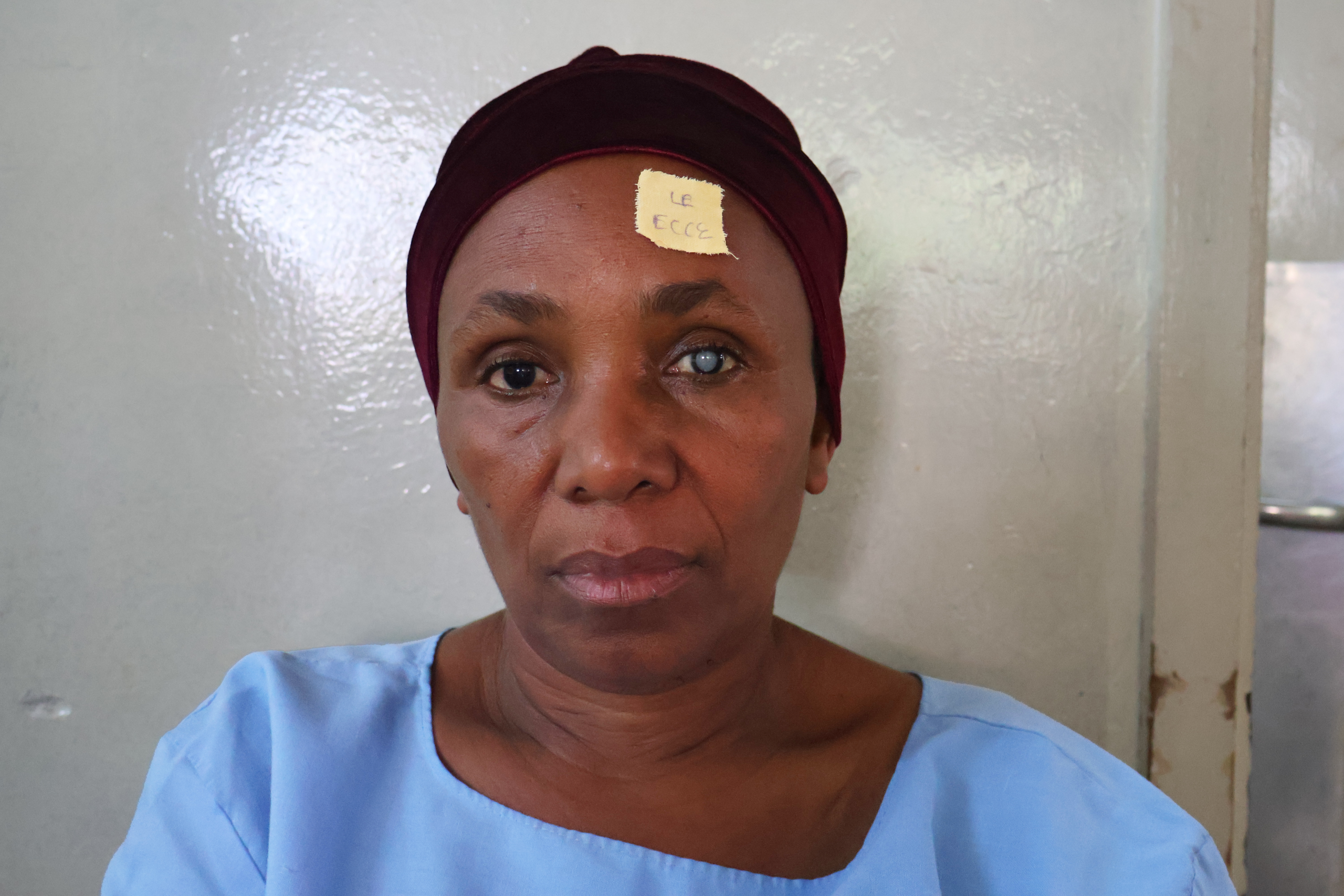
A major international study led by researchers at the International Centre for Eye Health (ICEH) has found persistent differences in outcomes depending on where surgery was delivered.
Published in the British Journal of Ophthalmology, the study analysed 41,881 cataract-operated eyes from 168 population-based surveys across 61 countries, making it the largest harmonised population-based analysis to compare cataract surgical outcomes by facility type.
Researchers used data from Rapid Assessment of Avoidable Blindness (RAAB) surveys to compare outcomes from cataract surgery performed between 2000 and 2020. They first compared surgery delivered through temporary outreach camps with surgery at fixed hospitals and clinics, before comparing government, non-governmental organisation (NGO) and private providers within fixed facilities.
Outcomes improved, but gaps persist
Overall, 9.7% of the surgeries analysed were performed through temporary outreach camps, with the remaining 90.3% carried out in fixed facilities. Temporary camp outreach was particularly important in some regions, accounting for 18.4% of surgeries in South Asia and 11.5% in sub-Saharan Africa in the dataset.
After adjusting for age, sex, year of surgery and world region, the probability of achieving presenting visual acuity of at least 6/18 (a measure of good outcome in historic surgeries) was 60.6% following surgery in outreach camps, compared with 66.6% in fixed facilities, a difference of six percentage points.
Importantly, outcomes improved substantially in both settings over the two decades. The adjusted probability of achieving this level of vision increased from 50.0% to 79.8% in fixed facilities, and from 43.6% to 74.9% in outreach camps between 2000 and 2020. However, the difference between the two delivery models remained broadly unchanged. These findings are particularly interesting in light of recent estimates of eCSC that current trends fall well short of a WHO target for 2030.
The researchers stress that outreach cataract services vary considerably. Some are short-term or externally organised camps, while others operate as extensions of established hospitals, using the same surgical teams and follow-up systems. The study could not determine which aspects of outreach provision were responsible for the observed differences in outcomes.
The findings therefore do not suggest that outreach surgery is inherently lower quality. Instead, the authors argue that where outreach is an important part of cataract provision, it should be integrated into continuous care pathways linked to fixed facilities, with standardised assessment, surgical safety, postoperative review, access to refractive correction and routine monitoring of outcomes.
Government and NGO hospitals achieve similar outcomes
Differences between types of fixed facility were smaller. The adjusted probability of achieving vision of at least 6/18 was 64.8% in government hospitals, 66.8% in NGO hospitals and 69.5% in private hospitals. Outcomes in NGO facilities were not statistically significantly different from government facilities, while private hospitals had modestly better outcomes.
The comparable outcomes between government and NGO hospitals are particularly relevant in settings where non-governmental providers deliver a substantial proportion of cataract surgery. The researchers argue that NGOs should be viewed as substantive components of national cataract systems rather than peripheral providers.
Although private hospitals achieved somewhat better outcomes, the authors note that differences in surgical technique, patient selection and access to postoperative spectacles could contribute to this finding. Private services can also be more expensive and concentrated in urban areas, potentially limiting their role in addressing cataract need at population level.
The findings have implications for efforts to reach global cataract targets. Expanding access to surgery remains essential, but where service models with poorer outcomes provide a substantial proportion of operations, increasing surgical numbers without improving outcomes may have limited impact on effective coverage.
The researchers conclude that cataract programmes should routinely monitor outcomes across the different ways surgery is delivered. Improving access and quality together will be essential if countries are to ensure that more cataract operations translate into more people having their sight successfully restored.
Publication
Arazi M, Burd D, Henok SH, Taylor EH, Bascaran C, Bunce C, Buchan J, Mishra SK, Yadav R, Bastawrous A, Sabherwal S, Gichuhi S, Ramke J, Burton MJ, McCormick I, RAAB International Co-author Group. Variation in cataract surgical outcomes by facility type: evidence from 168 population-based surveys in 61 countries. British Journal of Ophthalmology. August 2026. https://doi.org/10.1136/bjo-2026-329992