
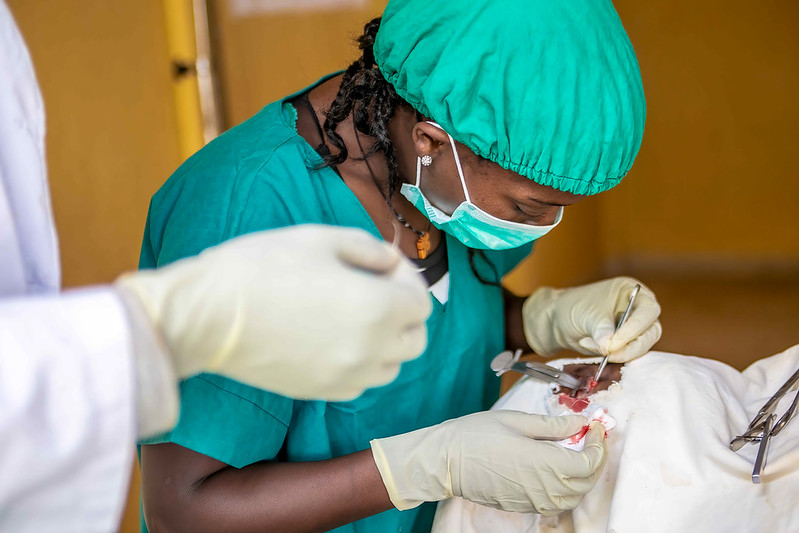
A large study in Ethiopia has identified several factors that could help trachoma programmes identify patients at greater risk of developing postoperative trachomatous trichiasis after eyelid surgery. The findings suggest that information collected during routine preoperative assessments could support more targeted follow-up and improve long-term surgical outcomes.
Trachomatous trichiasis occurs when scarring caused by repeated bacterial infections (with Chlamydia trachomatis) turns the eyelashes inward, causing them to rub against the eye. Without treatment, the condition can damage the cornea and lead to vision impairment or blindness. Surgery is a cornerstone of the World Health Organization’s ‘SAFE‘ strategy for trachoma elimination, but postoperative trichiasis remains a challenge, affecting both patients’ vision and confidence in surgical programmes.
Researchers conducted a secondary analysis of the FLAME trial, which followed 2,398 participants undergoing trichiasis surgery in Ethiopia. The analysis included 3,218 operated upper eyelids treated using either posterior lamellar tarsal rotation (PLTR) or bilamellar tarsal rotation (BLTR). By 12 months after surgery, 431 eyelids (13.4%) had developed postoperative trachomatous trichiasis, defined as one or more lashes touching the eye, evidence of epilation, or repeat trichiasis surgery.
The study found that several baseline characteristics were independently associated with postoperative trichiasis. Older age was one of the strongest predictors, with participants aged 60 years or older having almost twice the odds of developing postoperative disease compared with those aged 29 years or younger. Greater trichiasis severity before surgery, reflected by a higher number of lashes touching the eye or extensive epilation, was also associated with an increased risk, as were lower eyelid trichiasis and the presence of corneal opacity.
One of the study’s most novel findings was the role of patient-reported symptoms. Participants reporting the most severe ocular surface symptoms before surgery had around twice the odds of developing postoperative trichiasis compared with those reporting few or no symptoms. The authors suggest that incorporating a short symptom questionnaire alongside routine clinical assessment could help identify patients who would benefit from enhanced counselling and closer follow-up after surgery.
The type of surgery was also associated with outcomes. After accounting for patient characteristics and surgeon effects, postoperative trichiasis was more likely following bilamellar tarsal rotation than posterior lamellar tarsal rotation. The authors note that, together with previous randomised trials, these findings support posterior lamellar tarsal rotation as the preferred procedure when training new trichiasis surgeons, while recognising that experienced surgeons using bilamellar tarsal rotation can also achieve good outcomes.
Taken together, the identified factors predicted postoperative trichiasis with moderate accuracy, providing a practical basis for risk stratification. The authors suggest that patients at higher risk could be prioritised for earlier surgery, enhanced counselling and more intensive postoperative follow-up, helping programmes direct limited resources where they are most needed.
The findings highlight how information already collected during routine surgical assessment could help strengthen trachoma programmes. By identifying patients most likely to experience recurrence, eye care teams may be better able to improve follow-up, detect postoperative trichiasis earlier and support better long-term outcomes for people living with this painful, blinding disease.
Publication
Yu HN, Jin F, Abashawl A et al. Baseline Predictors for the Postoperative Trachomatous Trichiasis Following Lid Rotation Surgery in the FLuorometholone as Adjunctive MEdical Therapy for Trachomatous Trichiasis Surgery (FLAME) Trial. Ophthalmic Epidemiology. April 2026. https://doi.org/10.1080/09286586.2026.2646232